

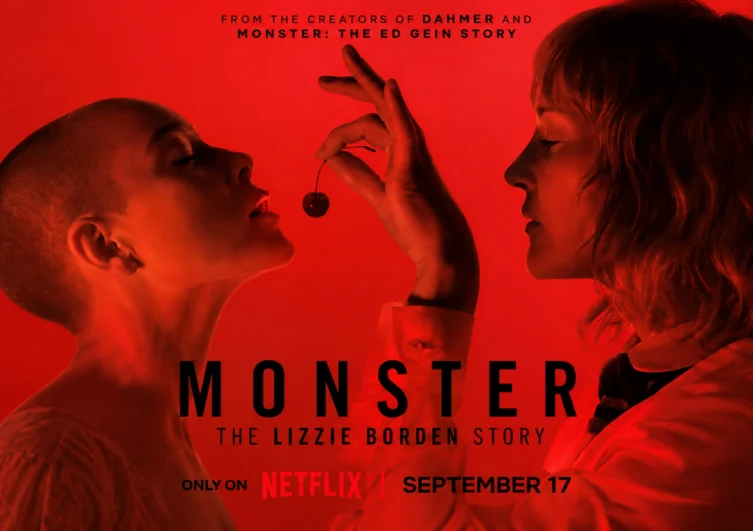
Ryan Murphy has given us Dahmer, Glee, The Assassination of Gianni Versace, Pose and Truman Capote behaving badly with the Swans. He has spent years taking murderers, socialites, closeted men, drag balls, Broadway disasters and various forms of beautifully lit emotional damage and turning them into mainstream LGBTQ+ television.
So when Lizzie Borden finally landed on his desk, there was absolutely no chance he was going to leave her there as a straight spinster in a sensible dress with an axe and some unresolved family tension.
No sir. Somewhere along the way, Lizzie was getting a lesbian storyline.
And, to be fair, it’s a very Ryan Murphy solution to historical ambiguity. Why settle for “we don’t really know much about her private life” when you can add longing glances, forbidden desire and a maid who suddenly has much more to do than change the sheets?
The problem is that Lizzie Borden was a real person, the murders were real, but the lesbian romance at the centre of Monster: The Lizzie Borden Story raises an obvious question:
Was there actually anything queer in Lizzie Borden’s real life, or did Netflix just take one of America’s most famous unsolved murders and give it a sapphic upgrade?
First, Meet the Real Maggie
Bridget Sullivan was real.
The Irish immigrant, who was in her mid-20s at the time of the murders, had worked as the Bordens’ live-in maid for nearly three years. Lizzie and her sister Emma called her “Maggie”, apparently carrying over the name they had used for a previous servant, due to an inexplicable family-wide memory disorder when it came to retaining the names of new maids.
And Bridget was very much in the house on August 4, 1892, when Andrew and Abby Borden were killed.
She spent part of that morning washing windows outside before going upstairs to rest in her room. Later, Lizzie called for her after Andrew’s body was discovered. Bridget became one of the most important witnesses at Lizzie’s trial, placing Lizzie inside the house around the time of the murders while also telling the court she had never witnessed the dramatic family warfare prosecutors were trying to establish.
So far, so Monster.
What Bridget’s testimony did not include was anything along the lines of:
“Oh, and Lizzie and I were secretly sleeping together and plotting axe murders.”
Because there is no verified historical evidence that they were lovers. There is also no historical basis for Bridget helping Lizzie murder Andrew and Abby Borden. The romantic relationship and murderous partnership depicted in Monster are inventions of the series.
Which is a fairly significant embellishment.
Netflix has essentially taken the maid standing in one of the most famous crime scenes in American history and promoted her from key witness to girlfriend, accomplice and partner in Victorian lesbian homicide.
That is quite the performance upgrade.
And the Real Bridget’s Life Became Considerably Less Exciting
After Lizzie’s acquittal, Bridget eventually moved west to Montana.
She married a man named John Sullivan and lived a relatively private life until her death in 1948. Later stories suggested she may have known more about the Borden household than she ever publicly revealed, but nothing establishes a secret romance with Lizzie or a role in the killings.
So if we’re looking for historical confirmation of the passionate Lizzie-and-Maggie relationship Netflix gives us, Bridget unfortunately left behind nothing helpful.
No love letters.
No secret diary.
No Instagram stories.
Nothing.
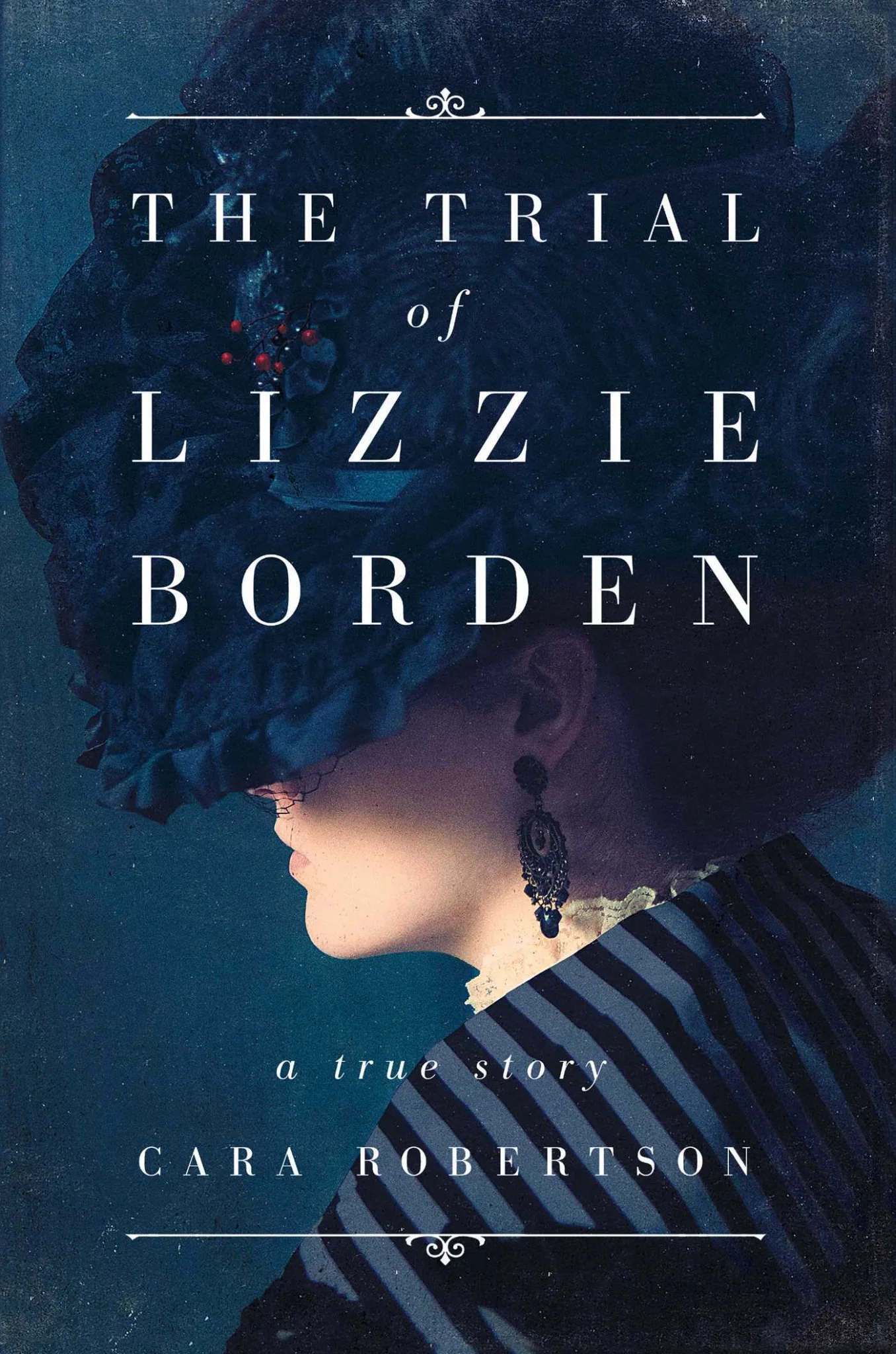
So Where Did Gay Lizzie Come From?
This is where things become much more interesting.
There really was a woman in Lizzie Borden’s later life who caused people to speculate about her sexuality.
She just wasn’t Bridget Sullivan.

Her name was Nance O’Neil, a famous stage actress whom Lizzie befriended around 1904, more than a decade after her murder trial. Lizzie had become an enthusiastic theatre-goer, and the two women became close enough that contemporary gossip eventually suggested their friendship might have been romantic.
Now we’re getting somewhere.
Except we’re also immediately back to the same frustrating problem:
Nobody knows.
Neither Lizzie nor Nance publicly confirmed a sexual relationship, and there are no surviving love letters or diaries that settle the question. Their closeness, and the gossip surrounding it, are real. What happened privately between them is not something the historical record can confidently answer.
And considering this is Lizzie Borden we’re talking about, people were hardly struggling for reasons to gossip about her.
Then Emma Packed Her Bags
Adding another layer to the mystery is Lizzie’s sister, Emma.
After the trial, the two sisters bought a large house in Fall River that Lizzie named Maplecroft. They lived there together until 1905, when Emma abruptly moved out.
They never reconciled.
Emma later said that conditions in the house had become “absolutely unbearable”, but refused to explain publicly what had happened. Because apparently this entire family was constitutionally incapable of giving future historians a straight answer about anything.
The timing of Emma’s departure, combined with Lizzie’s friendship with Nance and the theatrical crowd surrounding her at the time, helped fuel speculation that Emma disapproved of Lizzie’s lifestyle or relationship with Nance.
But again, speculation is doing a lot of work here.
Emma never said, “I moved out because my sister has a girlfriend.”
She essentially said, “Something happened, and I’m not telling you.”
Which, from a historical-research perspective, is incredibly inconsiderate.
Netflix Took That Mystery and Ran With It
Monster openly takes major liberties with this history.
The series moves Nance O’Neil backwards through time and has her helping Lizzie prepare for her murder trial, despite the real women not meeting until around 1904, more than a decade after Lizzie’s acquittal. Co-creator Ian Brennan has explained that the real friendship gave the writers a way to dramatise courtroom material they otherwise found difficult to make exciting.
More importantly for our purposes, Netflix itself acknowledges that the real-world speculation surrounding Lizzie and Nance helped inspire the series’ exploration of Lizzie’s sexuality through her fictional relationship with Maggie.
And suddenly the creative decision makes much more sense.
History gave Murphy and Brennan an unmarried woman whose sexuality remains unknown, a mysterious later friendship with an actress, an unexplained family estrangement and a maid who happened to be in the house during one of America’s most infamous double murders.
Television looked at that pile of unresolved questions and thought:
Excellent. They’re girlfriends.
So Was Lizzie Borden Actually a Lesbian?
Possibly.
Also possibly not.
And that is unfortunately the least exciting but most historically responsible answer.
There is genuine reason why Lizzie’s sexuality has been questioned. Her close relationship with Nance O’Neil was real, rumours about the nature of that friendship existed, Lizzie never married, and aspects of her private life remain tantalisingly undocumented. Her fondness for animals is also well documented, right down to a sizeable bequest to an animal-rescue organisation in her will.
And if we’re now just piling on stereotypes, there’s also her spinsterhood, her fond love of cats, a somewhat far-fetched resemblance to Eleanor Roosevelt and, naturally, that secret passion for lumberjacking.
None of which proves she was lesbian or bisexual.
And when it comes specifically to Bridget Sullivan, the answer is much clearer: there is no historical evidence establishing a romantic or sexual relationship between the two women. The Maggie romance in Monster is storytelling, not recovered queer history.
That doesn’t necessarily make it a bad storytelling choice. A drama is allowed to explore possibilities, particularly when it makes clear that it is creating a fictionalised version of someone whose inner life we can no longer access. Ella Beatty herself has described the series’ Lizzie as a character created from fragments of the real woman’s life, with imagination used to fill in the blanks.
And there are a lot of blanks.
More than 130 years after the murders, we still don’t definitively know who killed Andrew and Abby Borden.
We don’t know exactly why Emma walked out of Maplecroft.
We don’t know what happened between Lizzie and Nance O’Neil.
And we certainly don’t know who Lizzie fancied.
So Netflix hasn’t uncovered the secret lesbian life of Lizzie Borden.
It has simply looked at one of those enormous historical blank spaces, added candlelight, sexual tension and dead doves, and filled it in.
Which, when you think about it, may be the most Ryan Murphy thing Ryan Murphy has ever done.
Was Lizzie Borden queer? Maybe. Was Maggie Sullivan her secret axe-murdering girlfriend? History gives us absolutely no reason to think so.
Still, when the archive says “unclear,” Ryan Murphy apparently hears “make it horny.”


Leave a Reply