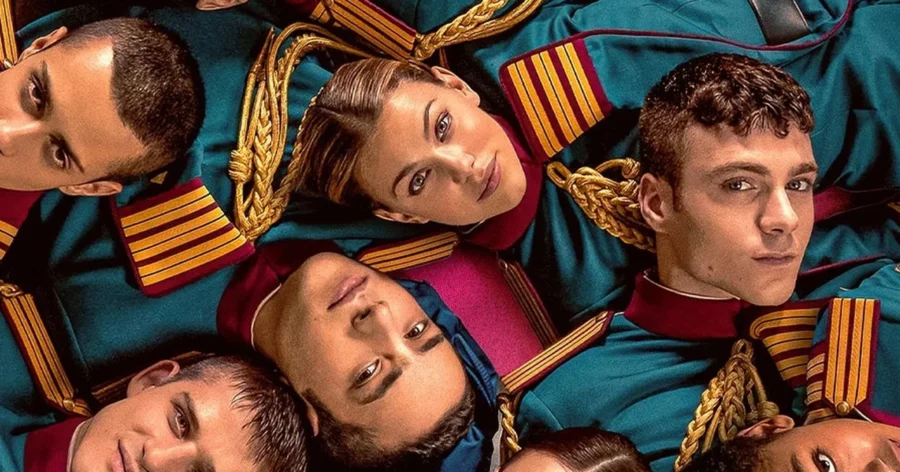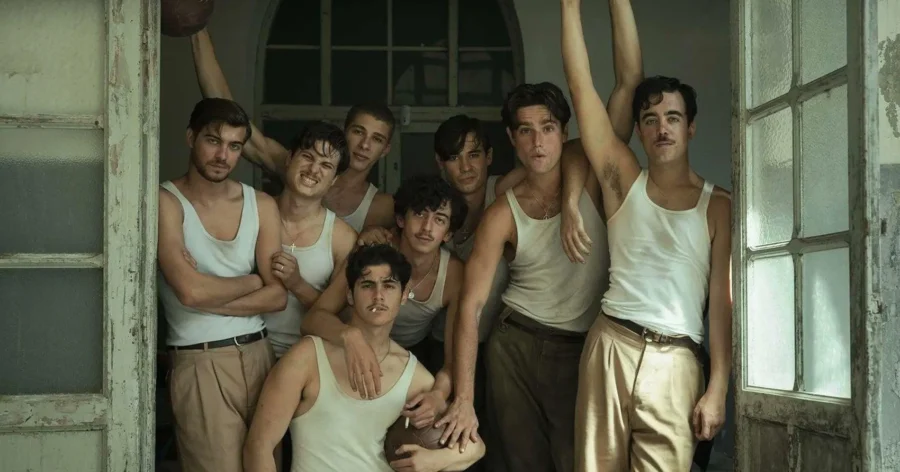
My Life with the Walter Boys returned to Netflix on 6 August 2026. Silver Falls quickly reclaimed the world’s attention. Within days, the ten-episode third season reached No. 1 in 65 countries. Its success confirms that the show has become a global phenomenon.
The series, based on Ali Novak’s novel, follows Manhattan teenager Jackie Howard. She rebuilds her life with the sprawling Walter family in rural Colorado. Jackie’s complicated feelings for brothers Cole and Alex drive much of the drama. Yet another Walter brother, Nathan, has one of the show’s most quietly meaningful stories.
Spoiler warning: This article discusses events from all three seasons of My Life with the Walter Boys, including the Season 3 ending.
What happens in Season 3?
Season 3 begins in the aftermath of George Walter’s medical emergency and Jackie and Cole’s interrupted declaration of love. George survives, but his recovery forces the family to reconsider its priorities. Meanwhile, Jackie tries to find her place in Silver Falls, Cole discovers a possible future behind the wheel and Alex directs his energy towards rodeo.
The romantic triangle remains central. However, the season also gives the wider Walter family room to change. Children prepare to leave home. Relationships face new tests, while ambitions pull people beyond the ranch. This change matters most for Nathan. His musical talent offers an opportunity that could transform his future.
Nathan Walter is more than “the gay brother”
Corey Fogelmanis plays Nathan, an openly gay teenage musician who also lives with epilepsy. From the beginning, the series lets those parts of his identity exist naturally. Neither one defines his entire personality.
His relationship with Skylar, played by Jaylan Evans, shares the turbulence of the show’s heterosexual romances. Nathan falls hard, makes mistakes and damages trust. He then tries to repair what he has broken. Their story includes affection, jealousy, disappointment and uncertainty. These problems arise because it is a teenage relationship, not because it is a gay one.
Queerness without crisis
Perhaps the most refreshing aspect of Nathan’s story is how little the series treats his sexuality as a problem requiring explanation.
Nathan is not trapped in a familiar television cycle of secrecy, shame and rejection. There is no dramatic confrontation with unaccepting parents, no campaign of homophobic cruelty at school and no suggestion that his straight brothers regard him differently. He does not spend the series questioning whether he deserves to be loved or struggling to justify who he is.
Instead, the writers give Nathan the same trials and tribulations as everyone around him. He worries about his family, his health, his music and his future. He can be tender and selfish, romantic and impulsive. Like the other young characters, he can make poor decisions. Those choices never become a judgement on an entire community.
That ordinariness is precisely what makes the representation meaningful. LGBTQ+ stories do not always need to begin with trauma or build towards acceptance. Sometimes acceptance can simply be the starting point, leaving queer characters free to be complicated, imperfect and fully alive.
“It offers a quiet vision of how uncomplicated life could become if people were accepted for who they are and allowed to love without fear or hatred. Families would still argue. Teenagers would still break hearts. Relationships would remain messy, and growing up would still be difficult. The world would not collapse because a boy loved another boy.”
Michael Cabral
The series never presents Nathan as “the gay Walter brother” standing apart from the family. He is simply one of the Walter brothers. His parents support him. His siblings tease and protect him as they do one another. Meanwhile, the world continues without treating his sexuality as a disruption.
Nathan and Skylar after Season 3
By the end of Season 3, Nathan’s future has expanded beyond Silver Falls. He earns a place with a band heading to Europe. Now he must decide whether music is worth leaving his family—and Skylar—behind. George and Katherine encourage him to take the opportunity. Skylar fears the separation, but promises that they will remain in contact.
The moment is neither a conventional breakup nor a guaranteed happy ending. It leaves Nathan and Skylar facing a recognisable question: can young love survive when two lives begin moving in different directions?
What could Season 4 mean for Nathan?
Netflix has already renewed My Life with the Walter Boys for a fourth season, expected in 2027. The continuation is certain, but Nathan’s place within it remains unclear. His European opportunity could inspire a richer story about independence, ambition and queer love across distance. However, it could also move him away from the centre of the series.
For now, the uncertainty makes his departure feel less like an ending than a challenge to the writers. After giving the series one of its most visible queer relationships, will Season 4 allow Nathan and Skylar to grow beyond Silver Falls—or quietly leave them behind?
A different kind of representation
Nathan’s story is not revolutionary because nothing painful ever happens to him. It is meaningful because his pain is not automatically caused by homophobia. He receives the freedom that straight characters routinely enjoy. He can fall in love, get things wrong, find forgiveness—or not—and continue becoming himself.
In a television landscape where queer adolescence is still frequently defined by rejection, My Life with the Walter Boys imagines something gentler. Acceptance does not remove every difficulty from Nathan’s life. It simply allows him to face the ordinary difficulties that were waiting for him anyway.
The family keeps arguing. Hearts keep breaking. The ranch keeps moving. And the world keeps turning at its usual pace.
Sources: Netflix Tudum: Season 3; Netflix Tudum: Season 4 renewal; Meristation: international chart performance.