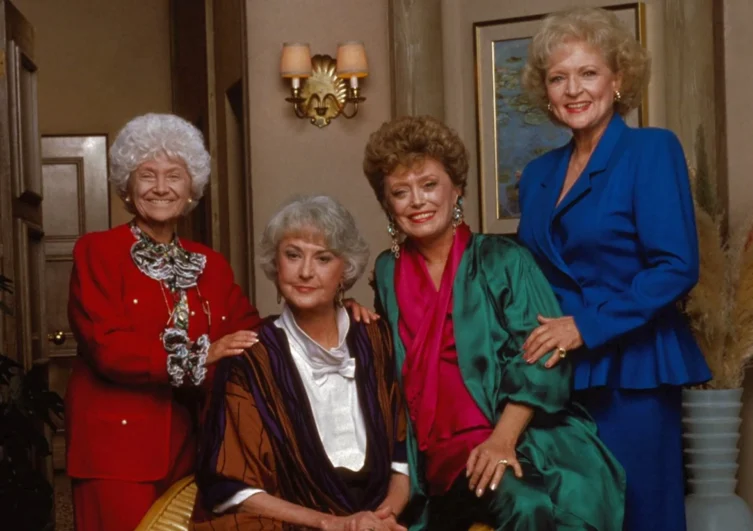
The Golden Girls LGBTQ+ legacy began long before Will & Grace introduced mainstream audiences to gay men as central sitcom characters. Four older women in Miami were already discussing lesbians, same-sex commitment and HIV over cheesecake.
When The Golden Girls premiered in 1985, television still often cast LGBTQ+ people as jokes, threats or tragic cautionary tales. The series did not invent queer representation, and it did not always get everything right. Yet The Golden Girls LGBTQ+ legacy lies in bringing queer lives into millions of homes with unusual warmth, humour and moral clarity.
Its quiet approach felt radical. Instead of presenting acceptance as a lecture, the show invited viewers into the kitchen, made them laugh and then asked why the people on screen deserved anything less than dignity.
The Golden Girls LGBTQ+ legacy, delivered through a punchline
One of the programme’s cleverest LGBTQ+ stories appeared in the 1986 episode “Isn’t It Romantic?” Jean, a recently widowed friend of Dorothy’s, comes to stay and develops feelings for Rose.
The writers could have built the episode around panic or disgust. Instead, the comedy comes from Rose’s innocence and Blanche’s magnificent vanity. When Blanche learns that Jean is attracted to Rose, her greatest concern is not that Jean is a lesbian. It is that, given the choice, Jean apparently preferred Rose to her.
The reaction is perfectly Blanche. She does not question whether one woman can love another; she questions Jean’s taste.
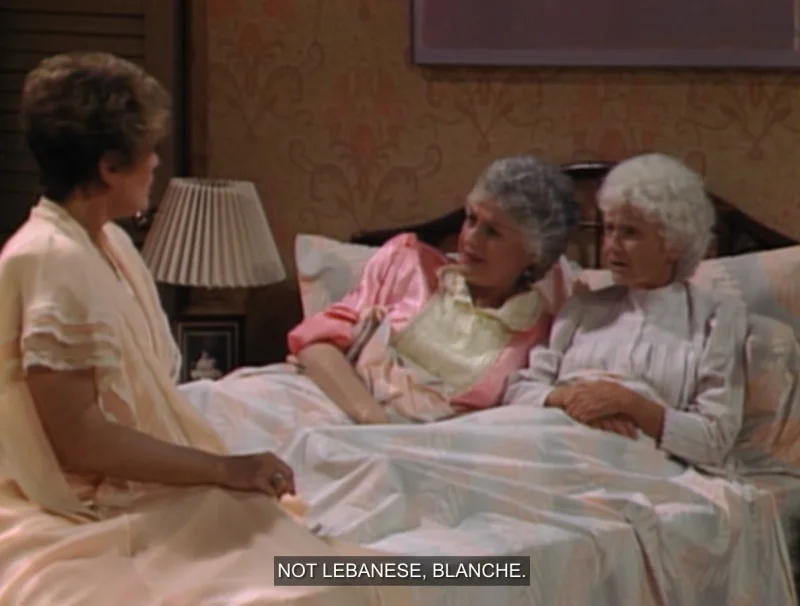
That distinction made the joke surprisingly progressive. Jean’s sexuality never becomes the punchline. She retains her dignity, grief and capacity for love. The comedy belongs to Blanche—and to her unshakeable conviction that she should naturally be irresistible to everyone.
Rose’s response is equally important. Although she does not reciprocate Jean’s feelings, she reacts with compassion rather than fear. Jean remains her friend, and her attraction does not turn her into a threat. For a mainstream audience in 1986, that uncomplicated kindness mattered.
Sophia’s role in The Golden Girls LGBTQ+ legacy
Sophia’s acceptance carried particular weight because the programme did not portray her as conventionally progressive. She was an elderly Sicilian Catholic whose stories were filled with village customs, family expectations and an occasionally flexible interpretation of morality.
Yet when LGBTQ+ relationships entered the house, Sophia often understood the essential point before anyone else. She recognises that Jean is a lesbian without requiring Dorothy’s nervous explanation. Her questions are blunt and her jokes unmistakably Sophia, but she treats Jean’s sexuality as information—not an emergency. When Dorothy wonders how Sophia would react if one of her children were gay, Sophia makes it clear that she would not love that child any less.
Her finest intervention comes later, when Blanche struggles to accept her brother Clayton’s commitment ceremony. Sophia asks why Blanche married George. Blanche explains that she loved him and wanted someone with whom she could grow old.
“Everyone wants someone to grow old with.”
Sophia Petrillo, The Golden Girls
The line works because it comes from Sophia. She does not abandon her Sicilian identity, Catholic background or traditional idea of family. Instead, she applies the values beneath them—love, commitment and companionship—to a gay couple.
The programme showed that accepting LGBTQ+ people did not require viewers to renounce their culture or religion. It asked them to recognise that queer people wanted the same love and place at the family table as everyone else.
Clayton was allowed to return
Blanche’s brother Clayton first comes out to her in the 1988 episode “Scared Straight.” Blanche insists that she does not mind him being gay; she simply dislikes the idea of him dating men. Dorothy promptly observes that Blanche has not entirely grasped the concept.
The episode exposes the limits of conditional acceptance. Blanche can tolerate homosexuality as an abstract fact, provided she never has to see it expressed through romance, partnership or an actual life.
Importantly, the writers did not discard Clayton after one “very special episode.” He returned in “Sisters of the Bride” with his partner, Doug, and announced that they intended to hold a commitment ceremony.
His return moved the story beyond coming out. Clayton no longer asked his sister merely to acknowledge that he was gay. He asked her to respect his relationship as equal to her own. Network television aired this story decades before marriage equality became law throughout the United States.
“72 Hours” challenged the cruelty surrounding HIV
In 1990, The Golden Girls broadcast “72 Hours,” an episode in which Rose learns that a blood transfusion may have exposed her to HIV.
The writers chose Rose deliberately. Audiences saw her as innocent, wholesome and sexually conservative. Placing her at risk challenged the widespread belief that HIV punished only gay men, drug users or people whom society labelled promiscuous.
During a moment of fear, Rose lashes out at Blanche. She suggests that the situation should be happening to someone who had slept with many people. Blanche delivers the episode’s moral centre: AIDS is not punishment for supposed sins.
At a time when misinformation and stigma remained widespread, the programme separated illness from morality. It told viewers that an HIV diagnosis revealed nothing about a person’s character and gave nobody permission to withdraw compassion.
Betty White later described the episode as daring because many people still feared even acknowledging AIDS. By centring the story on Rose, the writers reached viewers who might otherwise have regarded the epidemic as somebody else’s problem. TIME’s account of “72 Hours” explains how deliberately the programme confronted that stigma.
A chosen family before the phrase became fashionable
The show’s connection with LGBTQ+ audiences extended beyond its explicitly queer storylines. Its central household resembled a chosen family.
Dorothy, Blanche, Rose and Sophia were not a conventional nuclear unit. They were widows, divorcees, friends and relatives who built a home together after the lives society expected them to lead had changed or ended.
They fought, insulted one another and invaded each other’s privacy. They also offered emotional, practical and financial support. When rejection, fear or heartbreak arrived, the others remained at the table.
That model naturally resonated with queer viewers, many of whom built families through friendship after rejection or distance from biological relatives. The women showed how loyalty, shared experience and the decision to keep showing up could create a family.
The series also centred people television often pushed aside. Its protagonists were older women who continued to desire sex, romance, independence and adventure. They refused to disappear simply because society considered their most visible years to be behind them. That resistance to prescribed roles was inherently relatable to LGBTQ+ audiences.
Progressive, but not perfect
Celebrating The Golden Girls LGBTQ+ legacy does not require pretending that every joke or storyline has aged flawlessly.
Some terminology now sounds dated. Certain jokes about gender expression, sexuality and Dorothy’s brother Phil can feel uncomfortable through a contemporary lens. Sophia’s acceptance was real, but she could also be confused or contradictory. The series emerged from the 1980s and inevitably carried some of that period’s assumptions.
The Golden Girls was not a modern LGBTQ+ drama transported backwards in time. It was a mainstream network sitcom gradually pushing its audience towards greater empathy. Its characters did not always begin in the right place. What mattered was their capacity to listen, reconsider and arrive somewhere more humane.
That same quiet normalisation remains powerful in newer stories, including Nathan Walter’s refreshingly ordinary queer life in My Life with the Walter Boys.
Why The Golden Girls LGBTQ+ legacy still matters
The Golden Girls helped change minds because it made LGBTQ+ acceptance feel domestic rather than distant.
Jean was not a political argument. She was Dorothy’s grieving friend. Clayton was not a headline. He was Blanche’s brother. HIV was not divine punishment or evidence of somebody’s morality. It was a medical reality deserving honesty and compassion.
The programme let viewers encounter these ideas through characters they already trusted. Dorothy supplied reason, Rose supplied kindness, Blanche supplied the occasional magnificently self-centred distraction, and Sophia often reduced the entire debate to one sentence of irrefutable common sense.
It did not single-handedly begin LGBTQ+ representation on television. What it helped begin was a shift in how a broad audience could think: not through fear, abstraction or political slogans, but through friendship, family and shared human needs.
Four women sat around a kitchen table, passed the cheesecake and made queer love seem less frightening than prejudice.
Perhaps that was the real breakthrough. The world did not end when Jean loved a woman or Clayton wanted to marry a man. The jokes continued, the family remained together and life carried on at its usual pace.
Only with slightly more open minds and, naturally, another slice of cheesecake.
Image: Cast of The Golden Girls. Public domain, via Golden Girls Wiki.