

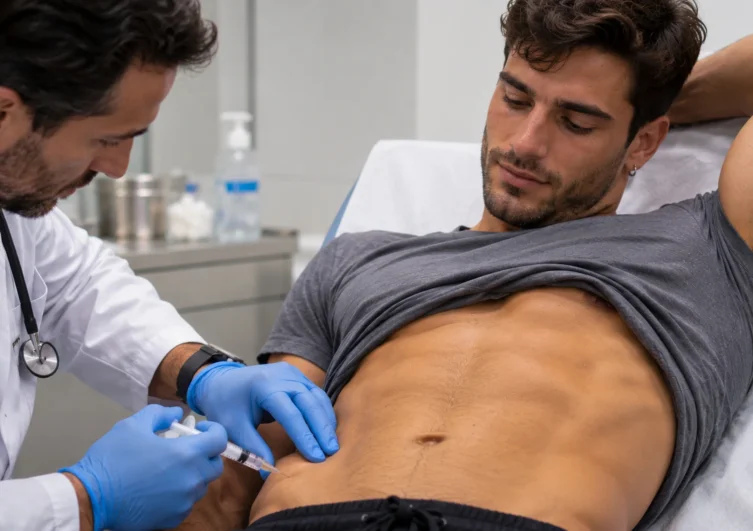
Preventing HIV could soon mean just two appointments a year for millions more people. On November 2, 2026, the US Food and Drug Administration granted tentative approval to the first generic version of lenacapavir, the long-acting HIV prevention medication administered every six months. It is an important step towards making one of the biggest advances in HIV prevention available beyond wealthy countries.
Developed by India’s Dr. Reddy’s Laboratories, the generic has an agreed supply price of US$40 per person per year for 120 low- and middle-income countries covered by a voluntary licensing agreement. Initial shipments are expected before the end of 2026, with wider distribution planned for 2027. That could be transformative for people who find daily PrEP tablets inconvenient, difficult to access or hard to take discreetly.
The original drug, developed by Gilead Sciences, is marketed as Yeztugo in the United States and Yeytuo in Europe. It was first approved for HIV prevention in June 2025 and has since begun reaching people through early national programmes. For gay and bisexual men, transgender people, women and others who could benefit from PrEP, the promise is simple: powerful protection against HIV without having to remember a pill every day.
How Does Lenacapavir Prevent HIV?
Lenacapavir is a capsid inhibitor, meaning it targets a vital part of HIV itself. Inside the virus is a protective protein shell called the capsid, which surrounds its genetic material. Far from being just packaging, this shell helps HIV carry out the steps needed to establish an infection and produce more viral particles.
Lenacapavir binds to the capsid proteins and interferes with their normal function. In particular, it disrupts the movement of HIV’s genetic material towards the nucleus of a human cell and interferes with the proper assembly of new virus particles. The result is that HIV has far greater difficulty completing its replication cycle after exposure.
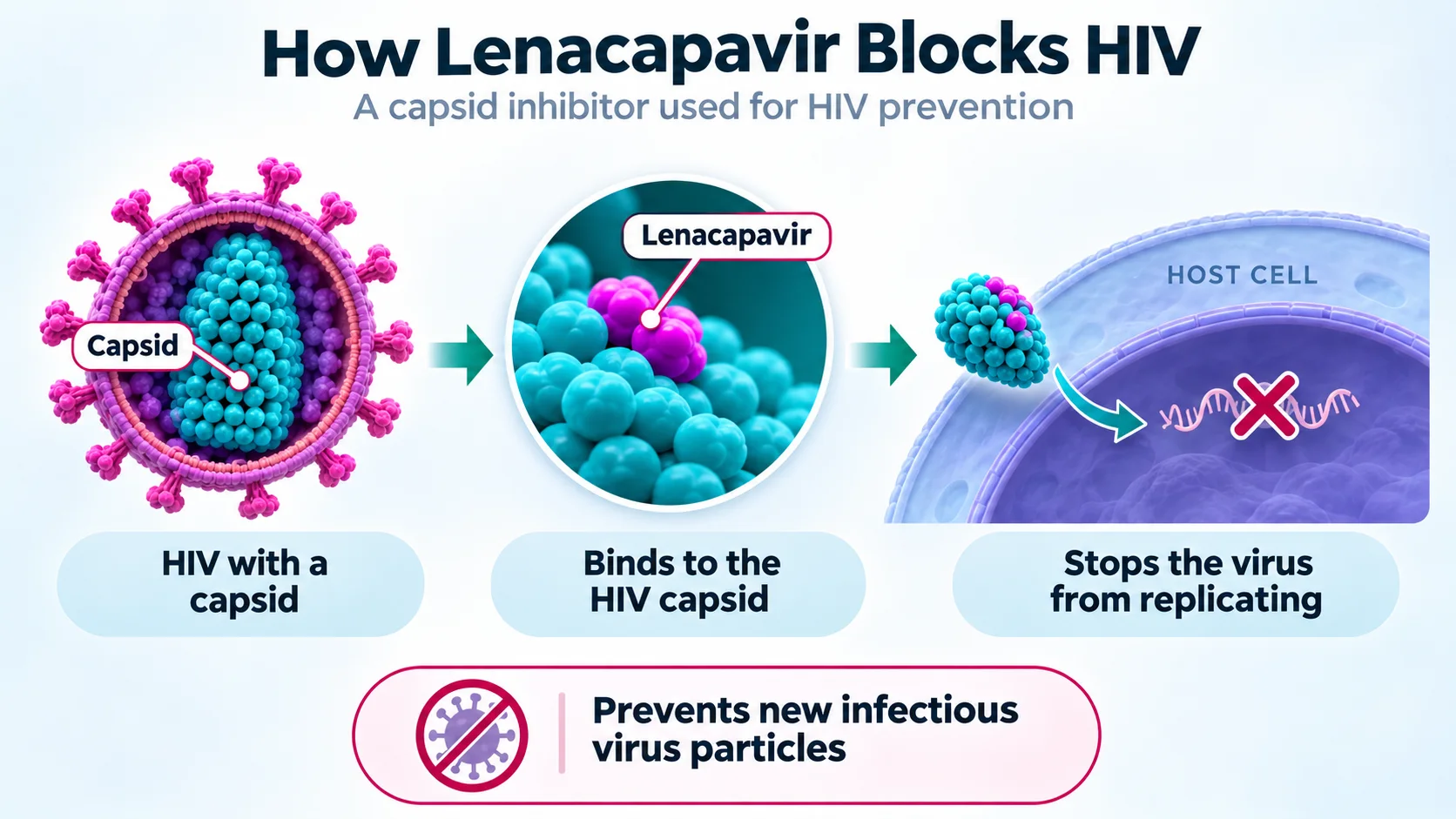
Unlike a vaccine, lenacapavir does not train the immune system to recognise HIV. It is an antiretroviral medicine that acts directly on the virus. It is used as pre-exposure prophylaxis (PrEP), meaning that protective drug concentrations are maintained before a possible HIV exposure.
The treatment begins with two subcutaneous injections into the abdomen or thigh on day one, along with oral tablets taken on days one and two. After that, the two injections are repeated every six months, approximately every 26 weeks. A healthcare professional administers the injections, and patients still need to attend follow-up appointments and HIV testing.
How Effective Is the HIV Prevention Injection?
Clinical trial results have been remarkable. In the PURPOSE 1 trial, involving adolescent girls and young women in South Africa and Uganda, no HIV infections occurred in the lenacapavir group during the primary analysis. In PURPOSE 2, which included gay and bisexual men and gender-diverse participants, the drug reduced HIV incidence by approximately 96% compared with the estimated rate without PrEP.
The findings prompted the World Health Organization to recommend twice-yearly lenacapavir as another HIV prevention option in July 2025. It offers a major alternative to daily pills and more frequently administered injectable PrEP, although it does not eliminate the risk of infection entirely.
There are some important limits. People must test negative for HIV before starting lenacapavir and before every subsequent injection, because using it during an undiagnosed infection may encourage drug resistance. The medication does not prevent syphilis, gonorrhoea, chlamydia or other sexually transmitted infections. Common side effects include injection-site pain, swelling or nodules, as well as occasional headaches or nausea.
A $40 Generic Could Change Access
Affordability remains one of the greatest barriers to new HIV prevention technologies. The original Yeztugo injection carries a US annual list price of about $28,218, although insurance and national procurement arrangements can mean that patients pay substantially less. A generic supply price of $40 per year represents a dramatic difference for public health programmes working with limited budgets.
Crucially, the FDA’s November 2026 decision was tentative approval, not permission for the generic to be sold in the United States. Patent and exclusivity protections still apply there. Instead, the decision provides a regulatory foundation that can accelerate international reviews and procurement in eligible countries. The project has received support from Unitaid, the Clinton Health Access Initiative and Wits RHI.
According to the Clinton Health Access Initiative, more than 125,000 people in ten early-adopter African countries had already started receiving the original lenacapavir formulation by November 2026. Meanwhile, the Global Fund and the United States have set a goal of reaching three million people with the medication by the end of 2028. Whether that target is achieved will depend on drug supplies, national approvals, funding and the capacity of health services to deliver the injections.
When Will Lenacapavir Be Available Around the World?
The rollout is already underway, but regulatory approval does not always mean patients can immediately obtain the drug. In the United States, the branded version has been approved since June 2025. The European Union, including Portugal, authorised Yeytuo in August 2025, although national pricing and reimbursement decisions still determine access; there is no confirmed date for routine provision through Portugal’s SNS. The United Kingdom approved lenacapavir in December 2025, but access through England’s NHS remains subject to a cost-effectiveness review and funding decisions. Australia approved the treatment in December 2025, with registration in January 2026, while Canada granted approval in April 2026. Brazil approved a PrEP indication in January 2026, and a regional procurement agreement could expand access across 14 Latin American and Caribbean countries, including Mexico, Argentina, Chile and Colombia. In several African countries, early programmes are already administering lenacapavir; the first generic supplies are expected in late 2026, with substantially broader availability anticipated in 2027. Elsewhere, including parts of Asia, implementation will depend on local regulatory decisions, procurement and health-system readiness. There is no single confirmed worldwide release date.
A New Chapter in HIV Prevention
HIV prevention has progressed enormously over recent decades, from condoms and testing to daily PrEP and the scientific understanding that people with a sustained undetectable viral load do not transmit HIV sexually. Lenacapavir adds another valuable option, particularly for people who want long-lasting protection without a daily medication routine.
The science is impressive, but the next challenge is equitable access. An injection that prevented almost all HIV infections in major trials is a remarkable medical achievement. Making that protection available to the people who need it most could be an even greater one.


Leave a Reply