

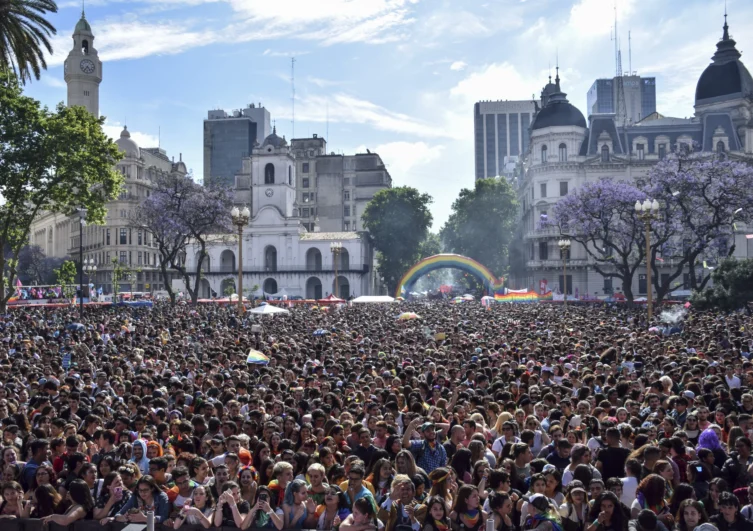
Thousands of people took to the streets of Buenos Aires on November 7 for Argentina’s 35th LGBTQ+ Pride March, combining celebration with demands for stronger transgender protections, historical reparations and action against discrimination. The demonstration unfolded against a backdrop of political tensions surrounding LGBTQ+ rights under President Javier Milei’s administration, while a controversy over a proposed postponement had already brought additional attention to the event.
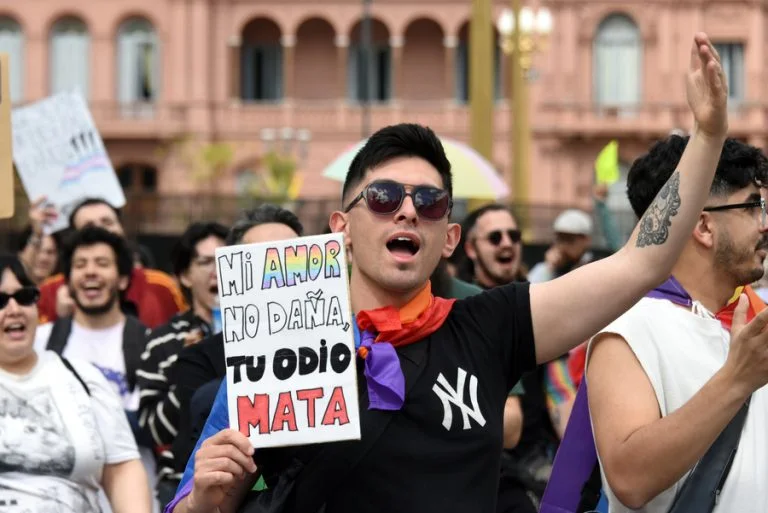
Rainbow flags, music and performances filled the Argentine capital as activists, community organisations and supporters marched towards the National Congress. This year’s demonstration placed particular emphasis on violence against transgender people, the protection of existing legal rights and the need for greater social inclusion. Under the slogan “When hatred advances, Pride in the streets is resistance,” participants sought to reaffirm the importance of public visibility at a time when LGBTQ+ organisations have expressed growing concerns about the country’s political direction.
Historical Reparations and Trans Rights
Among the central demands was the approval of Reconocer es Reparar (To Recognise Is to Repair), proposed legislation seeking historical reparations for older travestis and transgender people who have experienced decades of persecution, discrimination and institutional violence. The initiative aims to provide financial assistance and greater social protection to people whose lives have been shaped by exclusion from employment, healthcare and other fundamental rights. In Argentina, travesti is a distinct social and political identity embraced by many transfeminine people, carrying a history of activism and resistance that is not always fully reflected by the English term transgender.
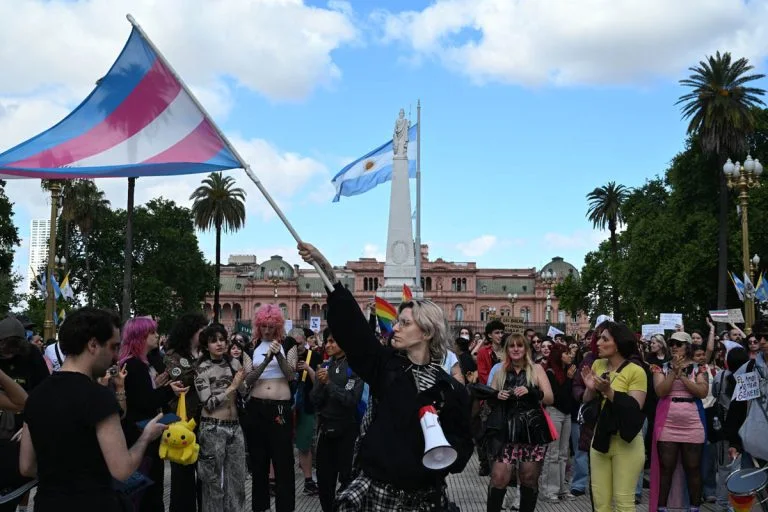
Demonstrators also called for a comprehensive Trans Law (Ley Integral Trans) to strengthen protections and address structural inequalities in healthcare, education, employment and housing. Other demands included improvements to anti-discrimination legislation, access to sexual healthcare and stronger institutional responses to hate-motivated violence. Recent attacks against transgender women in Buenos Aires’ Palermo neighbourhood were among the incidents highlighted by activists, who argued that legal recognition alone cannot guarantee safety or equality.
A Controversial Attempt to Postpone Pride
The march had already attracted attention before taking place, following a proposal by Buenos Aires authorities to move the event from November 7 to November 21 because of security and logistical preparations surrounding Pope Leo XIV’s visit to Argentina, scheduled to begin the following day. City officials presented the request as an operational measure rather than an objection to the demonstration itself, but LGBTQ+ organisations opposed changing a date that had been established months earlier. They argued that the community’s right to demonstrate should not be compromised and that arrangements could be made to accommodate both events.
Following discussions between organisers and municipal authorities, the march proceeded on its original date, with adjustments to the traditional route. Although the proposed postponement was not attributed directly to the Vatican, the controversy added another dimension to an event already shaped by political debate and concerns about the visibility of LGBTQ+ communities in public life.
Celebration and Resistance in a Changing Argentina
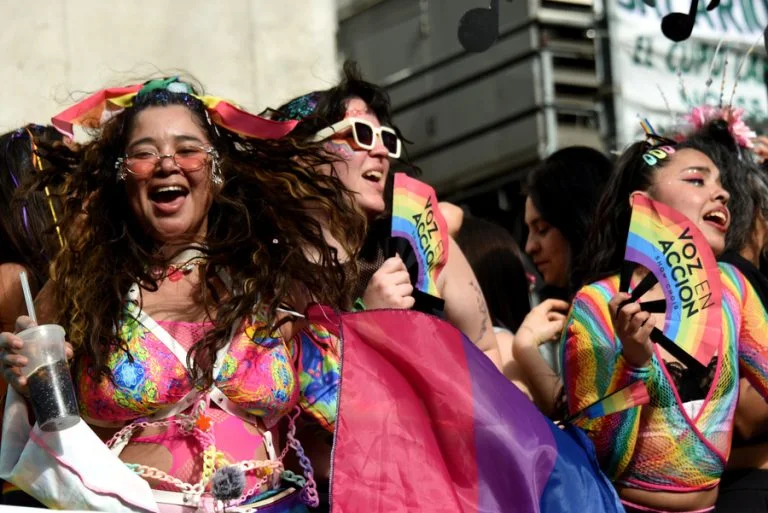
Despite the political tensions, the march retained its festive character, with artistic performances, community activities, information stalls and free HIV testing. Argentine music stars María Becerra and La Joaqui were among the performers, helping bring wider attention to a demonstration that has become one of Latin America’s most recognisable LGBTQ+ events. The gathering also paid tribute to Argentina’s human rights movement, connecting contemporary demands for equality with the country’s history of resistance to state repression, particularly as the nation approaches the 50th anniversary of the 1976 military coup.
Argentina has historically been considered a regional pioneer in LGBTQ+ legislation, having legalised same-sex marriage in 2010 and adopted its landmark Gender Identity Law in 2012, which allows people to change their legal gender without medical intervention or judicial approval. However, organisations defending LGBTQ+ rights have raised concerns about developments under President Javier Milei, including a 2025 decree restricting access to gender-affirming medical treatments for people under 18. Activists have also criticised public spending cuts and government rhetoric that they believe contribute to an increasingly hostile environment for vulnerable communities.
Against this backdrop, the 35th Buenos Aires Pride March represented both a celebration of achievements secured over decades of activism and a renewed demand for protections that participants believe remain under threat. As thousands gathered in the streets of the Argentine capital, the demonstration reinforced a message that has accompanied the country’s LGBTQ+ movement for generations: Pride is not simply an annual celebration, but an ongoing struggle for recognition, dignity and the freedom to live without discrimination.


Leave a Reply