Spend enough time beneath a celebrity news story and eventually someone will ask it: “Why are there so many celebrities with transgender children?”
The question appears repeatedly across social-media comment sections. It resurfaces when Charlize Theron speaks about supporting her daughter Jackson, when Dwyane Wade and Gabrielle Union stand beside Zaya Wade, or when Naomi Watts and Liev Schreiber celebrate their daughter Kai’s ambitions.
The list appears to keep growing. Annette Bening and Warren Beatty have an adult transgender son, the writer Stephen Ira. Jamie Lee Curtis has spoken proudly about her daughter Ruby. Cynthia Nixon has celebrated her son Samuel, while Cher became one of the earliest globally recognised celebrities to navigate this conversation publicly through the transition of her son, Chaz Bono.
When so many familiar names appear together, the pattern can seem striking. It may even appear to confirm the suspicion voiced beneath countless posts: is something about celebrity culture producing transgender children?
Yet that question begins with an unsupported assumption.
Celebrities do not necessarily have transgender children at a higher rate than anyone else. Their families are simply more visible. A conversation that would remain private in an ordinary household can become an interview, headline or viral post when it involves an Oscar winner, a basketball legend or one of the most famous singers alive.
We are not looking at a representative sample of society. We are looking through the magnifying glass of fame.
Why Celebrities With Transgender Children Seem So Visible
Celebrity families occupy an unusual place in public life. We know their children’s names, see family photographs and watch them grow through interviews and social media. When one of those children publicly identifies as transgender, the story can generate thousands of articles and millions of reactions.
That volume of coverage makes a relatively small number of families appear much larger.
Six unrelated families in six different cities would not usually be interpreted as evidence of a trend. Replace them with six internationally recognised names, however, and the stories become connected in the public imagination. Algorithms recommend similar articles, comment sections compile lists and the same examples reappear whenever another family discusses gender identity.
Celebrity anecdotes reveal who attracts attention. They offer no evidence that transgender people are born disproportionately into famous families.
Acceptance Does Not Create Identity
Behind the social-media question often sits a more provocative suggestion: perhaps wealthy, liberal or unconventional parents encourage their children to become transgender.
But there is a difference between creating an identity and creating an environment in which someone feels safe enough to express it.
A child who expects rejection may remain silent. Another who believes their parents will listen may speak openly. The difference is not necessarily who they are. It is what they expect to happen after telling the truth.
A supportive home can therefore increase visibility without increasing the number of transgender people. It does not manufacture an identity; it reduces the danger associated with disclosing one.
Research associates supportive families and affirming environments with better outcomes for transgender and gender-diverse young people. The CDC identifies family support, school connectedness and consistent use of a person’s name and pronouns as protective factors. The Trevor Project also reports that parental and caregiver support is associated with a lower risk of suicide.
Acceptance is not a fashionable parenting experiment. It can be a matter of safety.
The Role of Privilege
Wealth and status may affect which stories become visible—but not because money creates transgender children.
Affluent families may have better access to specialist healthcare, counselling and supportive schools. They may also be able to relocate if their community becomes hostile. Children raised around artists and unconventional lives might encounter fewer rigid expectations about how men and women should behave.
Yet fame introduces dangers of its own. A recognisable surname can turn a personal identity into a subject of public debate. Supportive celebrity families may have greater resources, but their children can also face extraordinary scrutiny and abuse from strangers.
Zaya Wade’s experience illustrates both sides. She received visible support from Wade and Union, giving other families an influential example of affirming parenting. She also became the target of online hostility while still young.
Wade later helped establish Translatable, a resource for transgender children and their families. His family also left Florida amid a political environment they believed was becoming hostile to Zaya. The Associated Press reported on the family’s decision and Wade’s advocacy.
Privilege can provide options many families do not possess. It cannot make prejudice disappear.
For more Chronicle 19 commentary on political visibility and LGBTQ+ representation, read our examination of a possible Pete Buttigieg presidency.
Transgender People Are Not Confined to Hollywood
This is where the wider population matters. The Williams Institute at UCLA estimates that approximately 2.8 million Americans aged 13 and older identify as transgender. Almost none will become the subject of a magazine profile, and their parents will never be questioned about them on a red carpet.
For every celebrity parent speaking supportively in an interview, countless ordinary families are having similar conversations privately.
Some families respond with immediate acceptance. Others begin uncertain but learn. Rejection or denial still shapes many homes. As a result, numerous transgender people wait until adulthood or financial independence before speaking openly, while others never feel safe enough to tell their families.
Their absence from public view does not mean they do not exist. If transgender children appear more visible in accepting families, that may not demonstrate that acceptance caused their identities. It may show how many people become visible when rejection is no longer guaranteed.
Cher and Chaz: Before the Social-Media Era
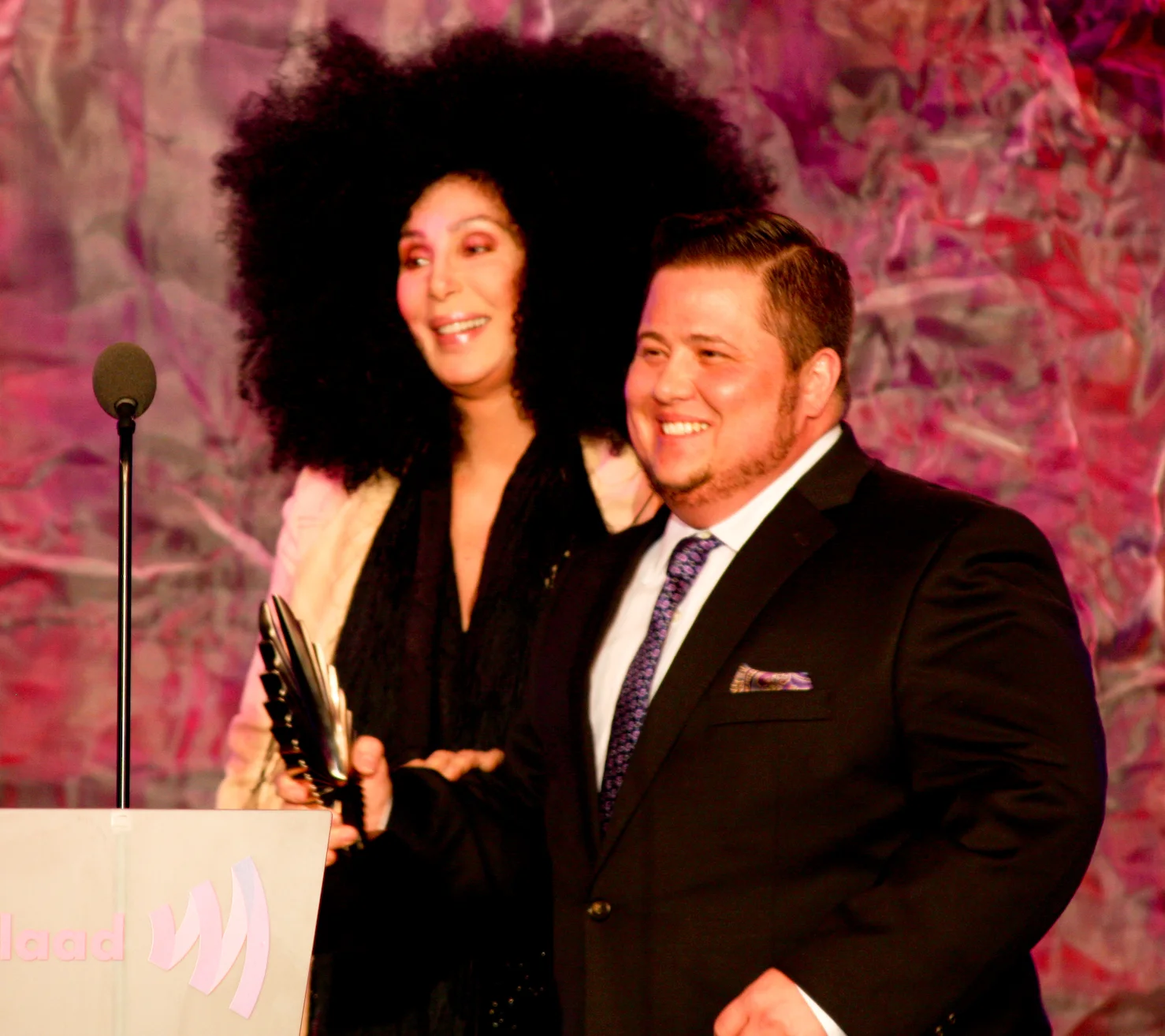
The idea that transgender people are a recent product of social media becomes harder to sustain when we remember Chaz Bono.
Chaz first entered American living rooms as the young child of Sonny and Cher. His life was visible long before Instagram, TikTok or today’s language around gender identity. He publicly announced his transition in 2009 and later documented part of his experience in Becoming Chaz.
His story matters because it was not presented as a flawless lesson in instant understanding. Cher has acknowledged that adapting was emotionally difficult, despite her status as a gay icon and LGBTQ+ ally.
Parents can love their children and still struggle when reality differs from the future they imagined. Acceptance does not require perfect knowledge on the first day. It requires parents to continue listening, learning and ensuring their confusion does not become their child’s punishment.
Cher eventually became a vocal defender of her son. Chaz, meanwhile, became one of the most recognisable transgender men in American popular culture. His identity was not produced by an algorithm. Social media merely gave later families a larger, faster and often harsher stage.
Visibility Is Not the Same as Creation
Society has made this mistake before. As more people began living openly as gay, lesbian or bisexual, some observers concluded that society was producing more queer people. What had changed most visibly, however, was not human nature. It was the cost of honesty.
When secrecy becomes less necessary, visibility rises.
Younger people now have access to language that many older transgender adults did not encounter until much later in life. They can find communities, recognise shared experiences and describe feelings that previous generations may have carried privately for decades.
That does not mean every question about gender leads to a permanent transgender identity. Young people deserve room to explore and understand themselves. Respecting that process is not the same as dictating its conclusion.
The Question We Should Be Asking
“Why do so many celebrities have transgender children?” is an understandable question inspired by an unreliable sample. Fame magnifies a handful of families until they appear representative of an entire social class.
A better question might be: why does parental acceptance attract more suspicion than parental rejection?
Parents who listen face accusations of encouragement. Those who respect a child’s identity face accusations of surrender. A family that protects its child can become evidence in someone else’s theory about cultural decline. Meanwhile, rejection is frequently treated as ordinary or private.
We can still criticise celebrity parents, and we should not automatically consider accepting one’s child heroic. It should be normal. Yet until it is normal everywhere, public examples of acceptance still carry cultural value.
These parents did not create a new kind of child. They became publicly associated with children who were able to express who they are.
Their wealth may have provided resources. Their communities may have offered greater flexibility. Their fame certainly attracted attention. None of that proves celebrity culture produces transgender identity.
Perhaps it simply shows what happens when children believe that telling the truth will not cost them their family.
Perhaps the remarkable fact is not that several celebrities have transgender children. It is that acceptance remains unusual enough for every example to become news.