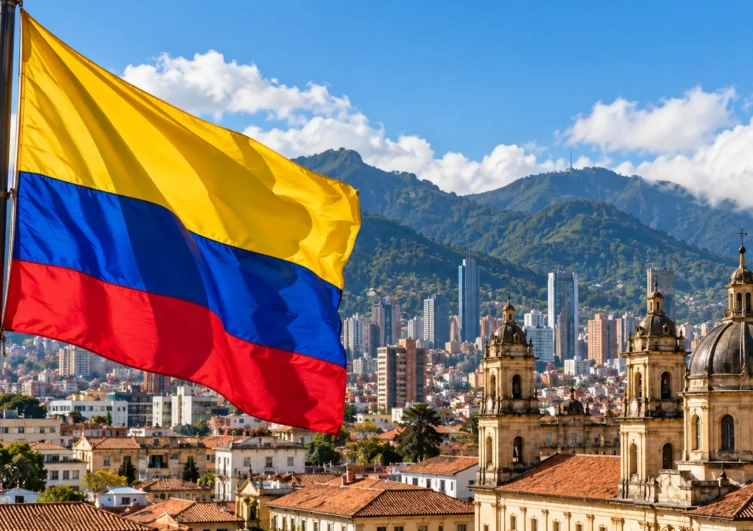
Colombia has withdrawn from the Equal Rights Coalition (ERC), an international alliance of governments and civil society organisations working to advance the rights of LGBTI people.
The Colombian Foreign Ministry announced the decision on 17 September, with immediate effect. Colombia had been serving as one of the coalition’s state co-chairs alongside Spain.
The government said the decision followed an internal assessment that concluded participation in the mechanism was not a priority. Deputy Foreign Minister Pedro Agustín Roa also stressed that leaving the coalition would not affect the rights of LGBTI people in Colombia, pointing to constitutional protections, public policies and Constitutional Court rulings protecting minorities on the basis of sexual orientation.
The decision nevertheless prompted criticism from Colombian LGBTQ+ organisations.
Why Colombia was part of the coalition
The Equal Rights Coalition was established in 2016 as an international forum for governments and civil society to coordinate efforts on LGBTI rights.
Its work includes international diplomacy, legislation and public policy, humanitarian protection, development goals and coordination between governments and civil society. The coalition currently brings together more than 40 countries.
Colombia’s withdrawal is particularly notable because it had been involved in the coalition’s leadership. The ERC’s official governance page lists Colombia and Spain as the state co-chairs for the 2024–26 term.
The withdrawal therefore ends Colombia’s participation not only as a member but also as part of the coalition’s leadership structure.
A change in foreign policy
The decision comes after a change of government in Colombia.
President Abelardo de la Espriella took office in August 2026, replacing Gustavo Petro. During the election campaign, De la Espriella expressed opposition to adoption by same-sex couples, a position that has attracted attention from LGBTQ+ organisations.
Several Colombian media outlets reported that the new administration viewed the coalition as an initiative associated with the previous government. El País reported that the Foreign Ministry described participation as not being a priority and linked it to the previous administration.
The government itself, however, has publicly framed the decision around priorities rather than a change to domestic legal protections.
That distinction matters.
Leaving an international coalition does not, by itself, repeal Colombia’s existing laws or court decisions protecting LGBTI people.
LGBTQ+ organisations raise concerns
Caribe Afirmativo, a Colombian organisation involved in the coalition, criticised the withdrawal and called for greater transparency about the government’s decision.
The organisation argued that international commitments on LGBTI rights should be treated as matters of state policy rather than being dependent on changes of government.
Other Colombian organisations and human rights advocates have also expressed concern that withdrawing from an international mechanism could reduce the country’s involvement in coordinated efforts on LGBTI rights.
These concerns refer primarily to Colombia’s international role and diplomatic commitments, rather than claiming that the withdrawal itself immediately removes domestic legal protections.
What changes now?
For the Equal Rights Coalition, Colombia’s departure means the country will no longer participate in the coalition’s work or its executive leadership.
For Colombia, the practical consequences are less immediate.
Existing constitutional protections and domestic court decisions remain in force. The Foreign Ministry has specifically said that the withdrawal does not affect those protections.
The more significant change may therefore be diplomatic.
For years, Colombia had presented itself internationally as an active participant in efforts to advance LGBTI rights. It had also taken on a leadership role within the ERC.
That role has now ended.
Whether the decision represents a broader change in Colombia’s foreign policy towards LGBTI rights will depend on the policies and international positions adopted by the new administration in the months ahead.
For now, one thing is clear: Colombia has left one of the world’s principal international forums dedicated to LGBTI rights, while insisting that its domestic legal protections remain unchanged.