

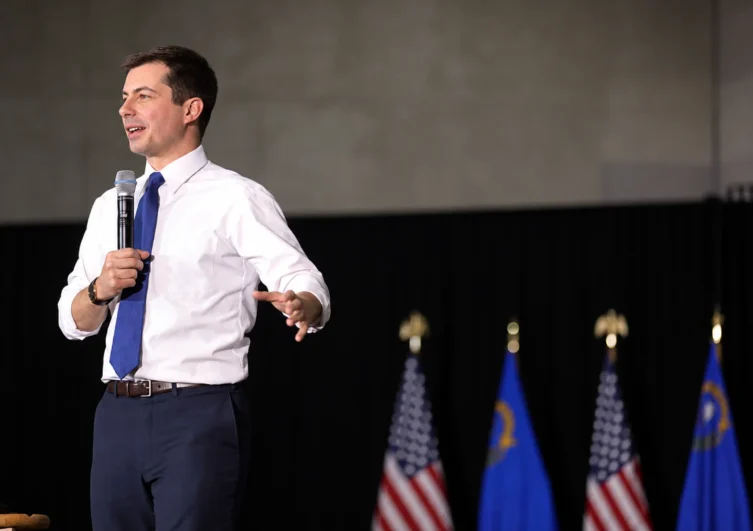
Pete Buttigieg did not hesitate.
Asked this week whether the United States was ready to elect a gay president, the former transportation secretary gave a remarkably short answer: “Of course.” He added that he would never have run for president in the first place if he had not believed that to be true.
It is a question Buttigieg has been answering for years, but the political context has changed considerably since his first presidential campaign. He is no longer the relatively unknown mayor of South Bend, Indiana. He is a former Cabinet secretary, a former presidential candidate and one of the most recognisable openly gay politicians in American history.
And yet, even now, there are prominent Democrats who have wondered privately whether America really is ready.
Kamala Harris thought the risk was real
One of the most revealing examples came from Kamala Harris.
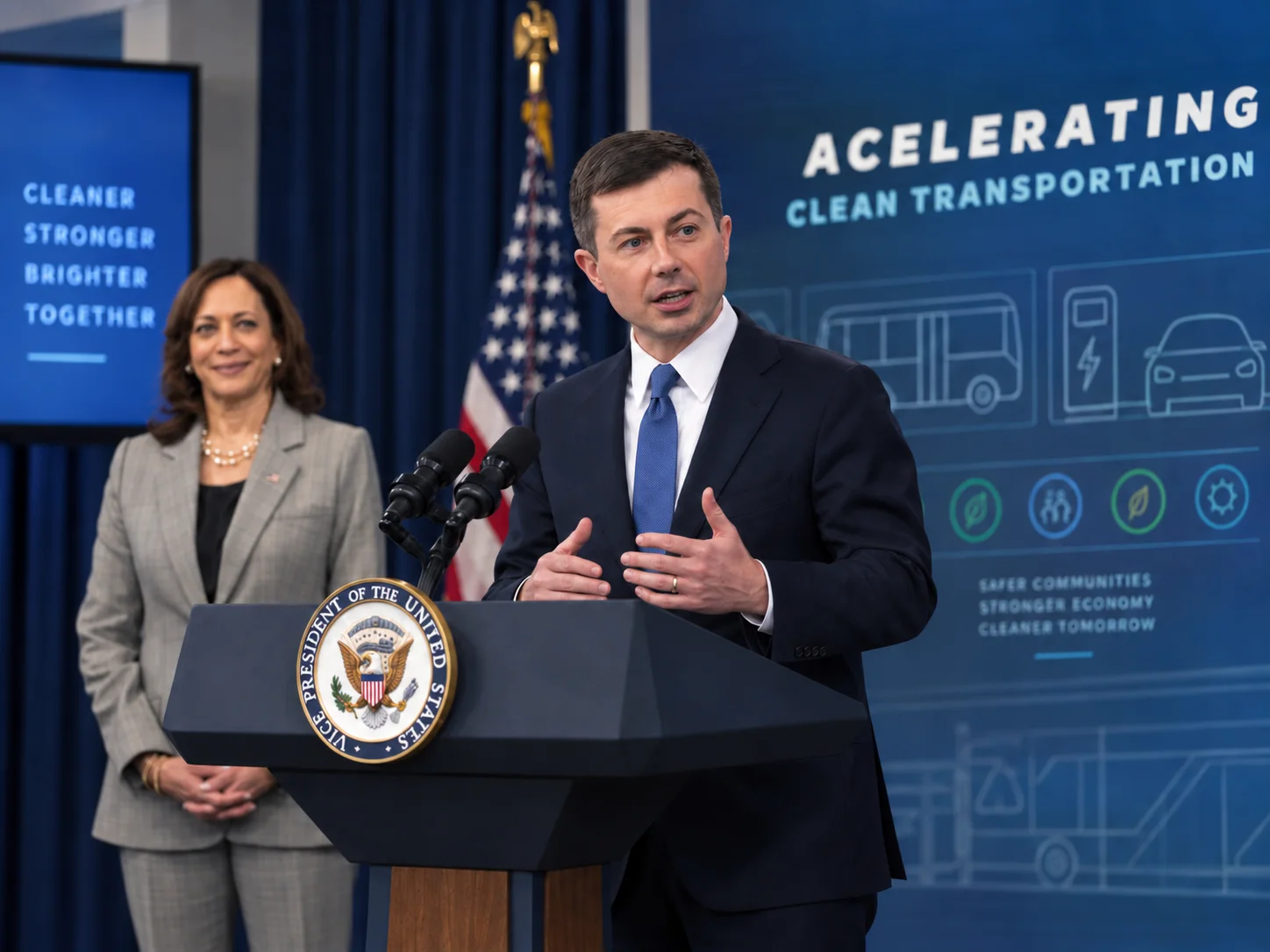
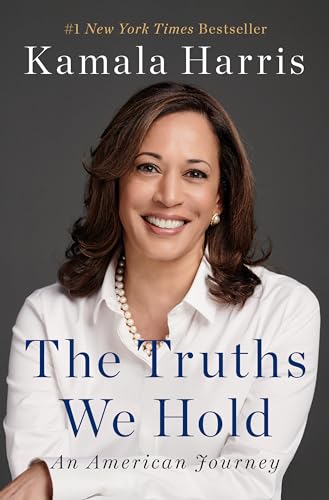
In her 2025 memoir 107 Days, Harris wrote that Buttigieg had been her preferred choice for running mate during the 2024 presidential campaign. But she ultimately concluded that putting an openly gay man on a ticket already led by a Black woman would be too politically risky.
Her concern was not really about Buttigieg himself. It was about how much difference American voters would accept at once.
Buttigieg later said he was surprised by that reasoning. His experience, he argued, had taught him that voters tend to care much more about whether politicians can improve their lives than about the identity categories attached to them.
That disagreement between Harris and Buttigieg is interesting because both were asking essentially the same question.
How much does being gay still matter in American politics?
America has asked this question before
Buttigieg was already facing it when he first ran for president in 2019.
That year, when asked directly whether the country was ready for a gay president, he answered “Absolutely.” He pointed to his own experience in Indiana, where he had come out publicly while serving as mayor and then won reelection by a wide margin.
His argument was simple. Voters had already been given the chance to reject him because he was gay, and many had not.
Then came the 2020 Democratic primary.
Buttigieg performed strongly in Iowa and New Hampshire, making him the first openly gay presidential candidate to become a genuine national contender. His sexuality was no longer a theoretical issue. Americans could now actually see a gay man campaigning for the presidency with his husband standing beside him.
That visibility also brought hostility.
Rush Limbaugh said America was not ready
In February 2020, conservative radio host Rush Limbaugh argued that American voters were not ready to elect “a gay guy kissing his husband” as president. He repeatedly focused on the image of Buttigieg appearing onstage with Chasten Buttigieg and questioned how that would look beside Donald Trump.
The comments caused a backlash, including from Republicans.
Republican senators Rob Portman and Lamar Alexander rejected the idea that Buttigieg’s sexuality should disqualify him. Alexander said there might be reasons not to vote for Buttigieg, but being gay was not one of them.
Buttigieg’s response was characteristically restrained. He said he was proud of his marriage and proud of his husband.
The episode captured something about that 2020 campaign. Buttigieg was running at a moment when an openly gay presidential candidate was both normal enough to win delegates and unusual enough that his marriage could still become a national political controversy.
Six years later, the question has not completely disappeared.
But the numbers tell a very different story.
What do Americans actually say?
Gallup first asked Americans in 1978 whether they would vote for a well-qualified presidential candidate who happened to be gay or lesbian.
Only 26 percent said yes.
By 2019, when Buttigieg was running for president, that figure had risen to 76 percent. Americans had become roughly three times as likely to say they could support a gay presidential candidate.
That is an enormous cultural shift.
The same change can be seen in attitudes towards same-sex marriage. In 1996, only 27 percent of Americans told Gallup that marriages between same-sex couples should be legally recognised. By 2022 and 2023, support had reached 71 percent.
There has been some movement in the opposite direction more recently. Gallup measured support for same-sex marriage at 65 percent in 2026, down from its peak, with most of the decline occurring among Republicans.
So the picture is not simply one of uninterrupted progress.
But America in 2026 is still profoundly different from America in 1978.
A gay president would still be something new
There is also a difference between telling a pollster that you could vote for a gay candidate and actually doing it in a presidential election.
Voters do not choose presidents on sexuality alone. Party loyalty, the economy, immigration, foreign policy, personality, age and dozens of other issues all become mixed together once the hypothetical candidate becomes a real person.
That is why no poll can settle the question Buttigieg was asked.
His 2020 campaign does offer one important piece of evidence, however. Being openly gay did not prevent him from becoming a serious presidential candidate, winning delegates and competing directly with figures such as Joe Biden and Bernie Sanders.
It also did not make prejudice disappear.
Both things can be true at the same time.
And then there is Pete himself
Buttigieg is now 44 and has considerably more national experience than he did when he first ran.
Since then, he has served as transportation secretary, become a father with Chasten and remained visible in Democratic politics. He has not announced a 2028 presidential campaign, although speculation about another run has continued.
What is striking is how little drama he now attaches to the question of whether his sexuality would make such a campaign possible.
In 2019, being an openly gay presidential candidate was itself a historic event. In 2026, Buttigieg talks about it almost as though the interesting part of the question has already been answered.
Perhaps that confidence comes from having already tested the proposition.
He came out while holding elected office in Indiana. Voters reelected him. He ran for president. He won delegates. A presidential Cabinet role followed. His husband became a familiar figure in American political life.
None of that proves that the United States would elect him, or any other gay candidate, president.
But it does explain why his answer this week required only two words.
“Of course.”
Personally, I’d be delighted and clap my hands with joy. Or even my buttcheeks because frankly, if America elects its first gay president, restraint feels unnecessary.

.jpg)
Leave a Reply