

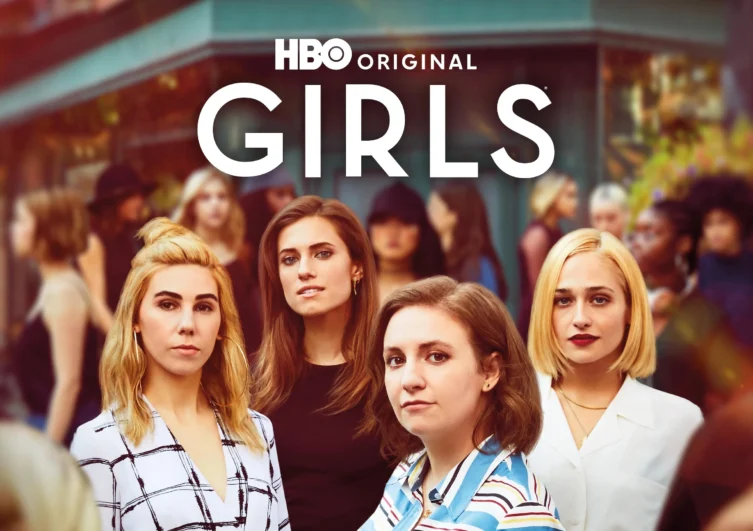
Nearly a decade after its divisive and unforgettable finale, HBO’s Girls is officially returning. Lena Dunham is bringing Hannah, Marnie, Jessa, Shoshanna and Elijah back for five new episodes, reuniting much of the original cast for a limited revival scheduled to begin production in 2027. But as the characters prepare to confront life in their forties, one familiar face remains conspicuously absent from the announcement: Adam Driver.
The girls are getting back together
HBO confirmed the revival on October 13, announcing that Lena Dunham will return as Hannah Horvath, alongside Allison Williams as Marnie Michaels, Jemima Kirke as Jessa Johansson, Zosia Mamet as Shoshanna Shapiro and Andrew Rannells as Elijah Krantz.
Judd Apatow, who helped bring the original series to television, will also return as executive producer.
The new instalment will consist of five episodes rather than a full season. Production is expected to begin in 2027, exactly ten years after Girls concluded its original six-season run.
Dunham explained that she had resisted revisiting the series until she felt there was a compelling reason to bring the characters back. That changed around her fortieth birthday, when she began imagining what their lives might look like today.
The announcement was accompanied by a playful reunion video featuring the returning actors, immediately reviving the familiar chemistry and uncomfortable humour that made the original series so distinctive.
What happened to Hannah, Marnie, Jessa and Shoshanna?
When Girls ended in 2017, its characters were moving in dramatically different directions.
Hannah had left New York City to take a teaching job and raise her son, Grover. Marnie was still searching for a sense of purpose, Jessa’s relationship with Adam remained complicated, and Shoshanna had largely distanced herself from her former friends.
The new episodes offer an opportunity to revisit those lives from a very different perspective.
The women who once struggled with rent, relationships, career ambitions and the emotional chaos of their twenties are now approaching middle age.
That shift creates a natural foundation for a revival. The questions that dominated the original series have not necessarily disappeared, but the consequences of the characters’ decisions have had another decade to unfold.
HBO has not yet released an official synopsis or confirmed where each character will be when the story resumes.
Will Adam Driver return?
Perhaps the biggest unanswered question concerns Adam Driver, whose portrayal of Adam Sackler became one of the defining elements of the original series.
Driver was not included in HBO’s announcement of the returning cast, and his involvement has not been confirmed.
His character’s turbulent relationship with Hannah, followed by his romance with Jessa, played a central role in the show’s most memorable and controversial storylines.
Since Girls ended, Driver has become one of Hollywood’s most recognisable actors, appearing in the Star Wars sequel trilogy, Marriage Story, House of Gucci and Ferrari.
Whether Adam Sackler will appear in the revival remains uncertain.
The same applies to several other memorable supporting characters, including Ray Ploshansky, played by Alex Karpovsky.
For now, HBO has only confirmed the five returning principal performers.
Why Girls became a cultural phenomenon
When Girls premiered in 2012, it was frequently compared to Sex and the City, although the similarities rarely extended beyond the idea of young women navigating friendships and relationships in New York.
Dunham’s series offered a deliberately uncomfortable alternative to the glamorous television fantasies that had preceded it.
Its characters were frequently selfish, privileged, insecure and incapable of making sensible decisions. Their failures were not incidental to the comedy; they were often the entire point.
The show also attracted criticism throughout its original run, particularly regarding its limited racial diversity and its portrayal of sex, relationships and body image.
Yet Girls became one of the defining television programmes of the millennial generation, earning 19 Emmy nominations and winning two awards.
Its frank depiction of sexuality and unconventional relationships also resonated with LGBTQ+ audiences, particularly through Andrew Rannells’ portrayal of Elijah, Hannah’s openly gay former boyfriend and eventual roommate.
Elijah’s return offers the revival an opportunity to revisit queer adulthood, dating and friendship from the perspective of a character who is no longer in his twenties.
A new generation has discovered Girls
The timing of the revival is particularly interesting because Girls has found a second audience in recent years.
Younger viewers have rediscovered the show through streaming services, social media clips, memes and podcasts devoted to revisiting its most uncomfortable moments.
Scenes that once generated controversy are now being discussed by a generation that was too young to experience the original broadcasts.
That renewed attention has helped transform Girls from a divisive contemporary comedy into a nostalgic cultural reference point.
But nostalgia alone may not be enough.
The challenge for Dunham will be to recreate the show’s distinctive voice without simply repeating the conflicts that defined its original characters.
There is also the question of whether Hannah, Marnie, Jessa and Shoshanna have changed enough to make their return satisfying, or whether their inability to grow up will remain part of the appeal.
When will Girls return to HBO?
Although HBO has officially ordered five new episodes, the network has not announced a premiere date.
Production is scheduled to begin in 2027, meaning the revival is unlikely to reach screens before filming and post-production are completed.
No official trailer or complete plot details have been released.
What is certain is that Lena Dunham is returning to the television series that helped define her career, bringing back a group of characters whose complicated friendships and spectacularly bad decisions made them impossible to ignore.
Ten years later, the question is no longer whether these girls will ever grow up, but what growing older has actually done to them.



Leave a Reply