

Brazil’s 2026 general elections have delivered a historic breakthrough for LGBTQ+ political representation. On October 4, voters elected 35 openly LGBTQ+ candidates to legislative positions across the country, compared with just 18 in 2022.
According to research by the Instituto Plena Cidadania and its VoteLGBT initiative, the newly elected politicians received a combined 10.7 million votes, marking a significant expansion of LGBTQ+ visibility in Brazilian politics.
The results mean that Brazil will have 14 openly LGBTQ+ members of its National Congress when the new legislature takes office in February 2027, including 13 members of the Chamber of Deputies and one senator.
Yet behind the celebrations lies a more complicated reality. While LGBTQ+ candidates have achieved unprecedented electoral success, they are entering a political environment in which conservative opposition, discrimination and threats of violence remain serious challenges.
A Historic Election for LGBTQ+ Brazil
The scale of the victory is difficult to ignore.
LGBTQ+ representation in Brazil’s national and state legislatures has increased by approximately 94% compared with the previous general election. The number of states electing openly LGBTQ+ representatives has also grown from eight to 14.
Women played a particularly important role in the results, accounting for more than three-quarters of those elected, according to the Instituto Plena Cidadania.
One of the most remarkable victories belonged to Erika Hilton, the transgender politician representing São Paulo.
Hilton secured approximately 1.6 million votes, becoming the most-voted woman elected to Brazil’s Chamber of Deputies in the country’s history.
Another significant result came from Thabatta Pimenta, who became the first transgender woman from northeastern Brazil elected to the national Chamber of Deputies.
Pimenta joins Hilton and Duda Salabert, who was also re-elected, bringing the number of transgender women elected to the Chamber to three.
Their victories represent more than individual achievements. They challenge longstanding assumptions about who can hold political power in one of Latin America’s largest democracies.
Political Progress in a Divided Country
Despite the record-breaking results, the elections also revealed the ideological divisions surrounding LGBTQ+ political participation.
All 35 candidates elected in the VoteLGBT and Instituto Plena Cidadania survey represented left-wing parties.
The Workers’ Party (PT) secured 17 of those victories, followed by the Socialism and Liberty Party (PSOL) with 14. The Communist Party of Brazil (PCdoB) elected three candidates, while the Green Party (PV) elected one.
Although LGBTQ+ candidates also stood for centrist and right-wing parties, none secured a seat within this group of elected representatives.
This concentration highlights the continuing relationship between LGBTQ+ political representation and Brazil’s progressive political movements.
It also raises questions about whether openly LGBTQ+ politicians can achieve broader acceptance across the country’s ideological spectrum.
For the newly elected lawmakers, securing a seat is only the beginning. Their ability to advance equality legislation will depend on navigating a Congress where conservative political forces retain considerable influence.
The Violence Behind the Campaigns
The electoral breakthrough is particularly striking given the hostility faced by LGBTQ+ politicians.
Ahead of the October vote, a monitoring initiative developed by the Instituto Plena Cidadania identified approximately 13,000 offensive Instagram comments directed at LGBTQ+ candidates and their campaigns.
The Sentinela monitoring project examined hundreds of thousands of potentially harmful comments, identifying patterns of targeted abuse.
According to findings reported by Brazil’s public news agency, Agência Brasil, women and Black LGBTQ+ candidates were disproportionately affected.
These findings illustrate a troubling contradiction: LGBTQ+ people are becoming increasingly visible in Brazilian political institutions while continuing to encounter hostility when seeking public office.
The consequences extend beyond individual candidates. Persistent harassment and intimidation can discourage others from entering politics, particularly people from communities already experiencing discrimination.
More Representation Does Not Automatically Mean More Rights
Brazil has made significant advances in LGBTQ+ rights over the past two decades, including recognising same-sex marriage and criminalising homophobia and transphobia.
However, legal recognition has not eliminated discrimination or political opposition to equality measures.
The newly elected LGBTQ+ lawmakers will be operating within a political system where proposals affecting gender identity, education, family rights and protections against discrimination remain deeply contested.
Even with 14 openly LGBTQ+ representatives in the National Congress, the community will occupy only a small proportion of the institution’s seats.
The election therefore represents an important shift in visibility and political participation, but not a guarantee of legislative victories.
That distinction matters.
Political representation can help bring previously marginalised experiences into parliamentary debates, but meaningful change also requires institutional support, effective legislation and sustained public engagement.
Why Brazil’s Results Matter Beyond Its Borders
Brazil’s electoral breakthrough arrives at a time when LGBTQ+ rights have become an increasingly prominent political dividing line internationally.
Across several democracies, debates surrounding transgender rights, anti-discrimination protections and LGBTQ+ visibility have become central to political campaigns.
Brazil’s experience offers an important example of how organised community mobilisation can translate into electoral victories, even within a polarised political environment.
VoteLGBT, established in 2014 and now an initiative of the Instituto Plena Cidadania, has spent more than a decade working to increase LGBTQ+ political participation.
Its activities include identifying candidates, collecting electoral data and connecting voters with political leaders.
The organisation has also received international recognition from Outright International for its work promoting LGBTQ+ participation in democracy.
The 2026 results suggest that these efforts are contributing to a more visible and organised political presence.
However, Brazil’s experience also demonstrates that electoral progress and political vulnerability can exist simultaneously.
The country has elected more openly LGBTQ+ lawmakers than ever before. The next challenge is ensuring that their presence translates into meaningful political power and lasting protections for the communities they represent.
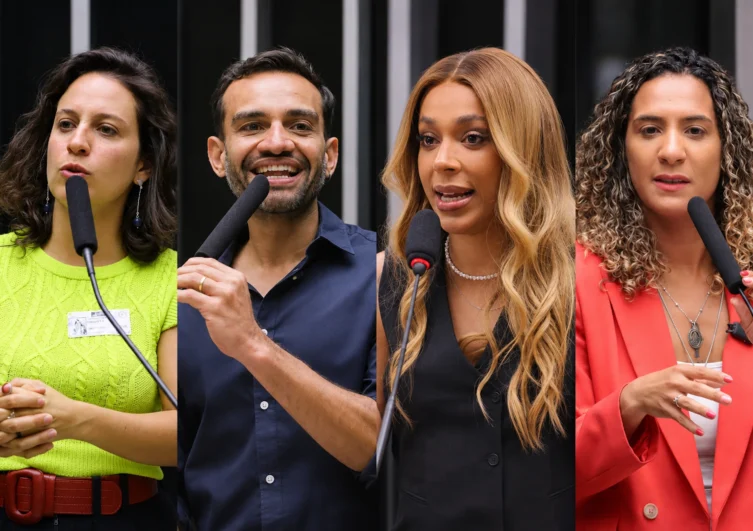
From left to right: Bella Gonçalves, Fábio Félix, Erika Hilton and Anielle Franco. Photos: Câmara dos Deputados, Brazil. Editorial montage: Chronicle19.


Leave a Reply