

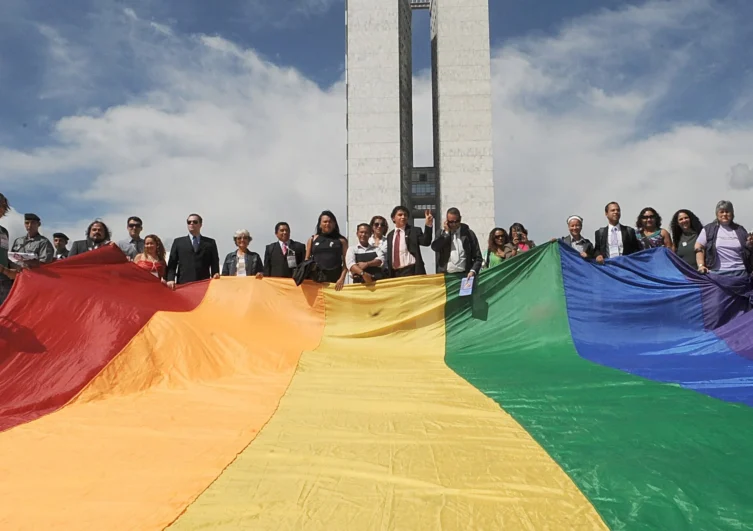
Brazilian authorities have offered a fairly useful reminder that online homophobic hate is not necessarily consequence-free.
On 10 September, Brazil’s Federal Police launched Operation Nêmesis in the southern state of Rio Grande do Sul. Officers executed four search warrants in an investigation into alleged racism, homophobia, transphobia and promotion of Nazism online. According to police, social-media posts allegedly incited discrimination against Black people, foreigners, gay people and trans people. Officers also seized phones and other electronic devices in Porto Alegre, Canoas, Alvorada and Campo Bom.
The potential consequences can be considerably more serious than having your account suspended for a few days. Under Brazil’s Racism Law, covered offences involving the practice, encouragement or incitement of discrimination can carry two to five years in prison plus a fine when they happen through social media, the internet, mass media or other publications.
Yes. Years.
Why does Brazil use a racism law?
Brazil does not currently have a separate federal criminal statute simply titled “the homophobia law”. Instead, in 2019, the country’s Supreme Federal Court, the Supremo Tribunal Federal or STF, ruled that Congress had failed to provide adequate criminal protection against discrimination based on sexual orientation and gender identity.
Until Congress passes specific legislation, the Court said Brazil should apply its existing Racism Law to homophobic and transphobic conduct. The ruling also covers discrimination based on actual or perceived sexual orientation or gender identity.
The Court described homophobia and transphobia as forms of what it called “social racism”. In other words, it recognised discrimination and exclusion directed at people because of their sexual orientation or gender identity. As a result, an online post encouraging discrimination against gay or trans people can fall under the same criminal framework used for other forms of discriminatory hate.
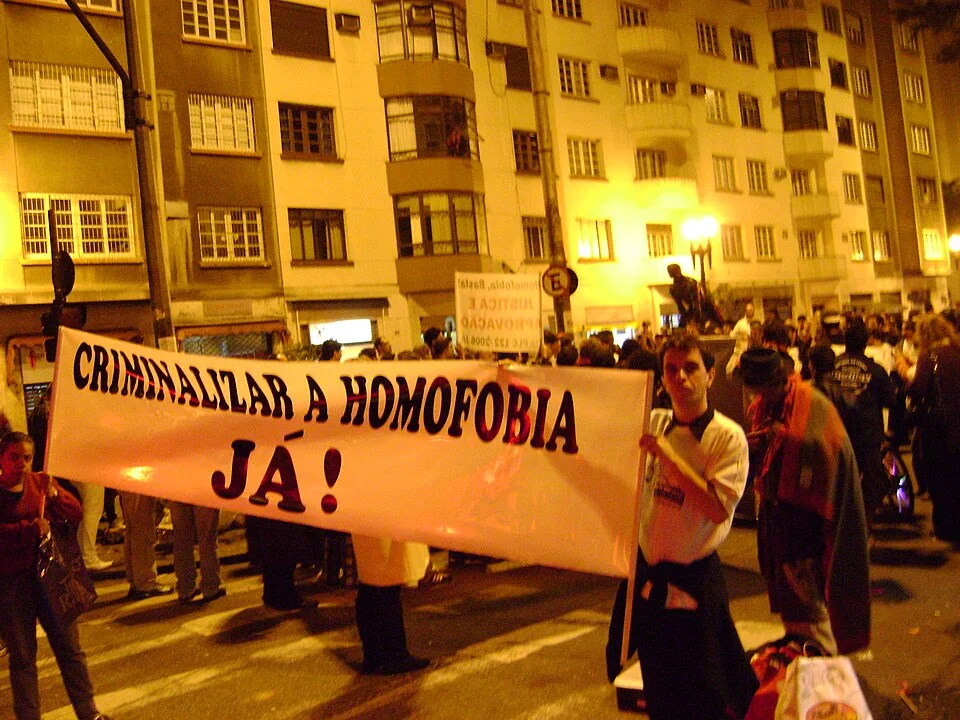
Brazil later made the online element particularly explicit. In 2023, lawmakers changed the Racism Law. For covered offences committed through social media, the internet, mass communications or publications, the penalty is two to five years’ imprisonment and a fine.
However, before everybody starts deleting that slightly bitchy tweet from 2017, there is an important distinction: not every rude, offensive or homophobic comment automatically results in five years in prison. The offence, evidence and circumstances matter. The conduct still has to meet the criminal threshold for practising, inducing or inciting discrimination or prejudice.
Individual attacks can fall into a different category too. In 2023, Brazil’s Supreme Court said courts may treat homophobic or transphobic offences aimed at one person as racial insult. As a result, Brazil’s anti-racism framework can protect individual LGBTQ+ people as well as the wider community.
Even the platforms now have responsibilities
Brazil has also changed the rules for the companies hosting all this. In June 2026, the STF finalised new parameters for when internet platforms may be held responsible for third-party content.
Under the Court’s ruling, platforms can face liability when systemic failures stop them taking adequate measures against certain categories of serious illegal material. That list includes homophobia, racism, terrorism, offences against women and children, and incitement to self-harm or suicide.
So Brazil’s approach increasingly targets more than the person typing the abuse. It also asks whether large platforms are taking adequate steps when serious illegal content spreads through their services.
And these are not theoretical offences
Former Brazilian congressman Roberto Jefferson is one prominent example of homophobia forming part of an actual criminal conviction. In December 2024, Brazil’s Supreme Court sentenced Jefferson to nine years, one month and five days in prison. His conviction covered several offences, including homophobia, calumny and incitement connected to attacks on democratic institutions.
That nine-year term was not the punishment for homophobia alone. It was the combined sentence for several crimes. Then, in February 2026, the STF ordered Jefferson to begin serving his sentence. The court allowed him to serve it under house arrest, with electronic monitoring and restrictions including a ban on social media and interviews.
More LGBTQ+ discrimination cases are reaching Brazil’s courts
Brazil’s judiciary is also handling more LGBTQ+ discrimination cases. Figures released by Brazil’s National Council of Justice in June showed that judgments involving intolerance and insults based on sexual orientation, gender identity or gender expression were at least three times higher in 2025 than in 2024.
New cases involving discrimination based on sexual orientation increased from 167 to 317. Meanwhile, cases concerning gender identity rose from 83 to 221.
That does not necessarily mean prejudice itself suddenly tripled. Increased reporting, changes in classification and greater awareness of the law can all affect court statistics. However, the figures do show that Brazil’s legal framework against homophobic and transphobic discrimination is being used more often.
The framework also has limits. The Supreme Court explicitly protected religious teaching and expression when it issued its 2019 ruling. Religious leaders and believers remain free to express their doctrines and convictions. However, the Court said the line is crossed when expression becomes hate speech that incites discrimination, hostility or violence against people because of their sexual orientation or gender identity.
Brazil therefore has an unusual but increasingly consequential system. Congress still has not passed the standalone legislation that prompted the Supreme Court intervention. Instead, homophobia and transphobia are prosecuted through a law originally created to combat racism, together with later legislation and subsequent Supreme Court rulings.
And in 2026, that system is no longer merely something sitting in a judgment somewhere in Brasília. Police are executing search warrants over alleged online homophobic hate. Courts are handling more discrimination cases. Social-media platforms also have responsibilities concerning serious illegal content.
Under Brazilian law, that homophobic post you thought disappeared into the endless sewer of social media could still have serious consequences. In the right circumstances, it could carry a prison sentence of two to five years.
My question is why any form of verbal or physical hatred is allowed anywhere on this planet in the first place. Maybe the people of 2100 will look back at 2026 and think, “Damn, those were prehistoric times.”
But for now, I guess applauding the small steps taken to protect any human being from hatred is what we have to settle for.

Leave a Reply