

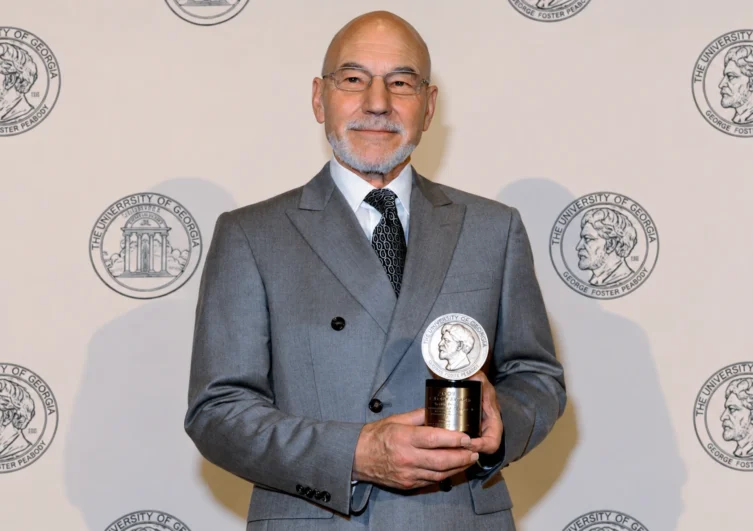
Sir Patrick Stewart, the celebrated British actor best known for portraying Captain Jean-Luc Picard in Star Trek and Professor Charles Xavier in the X-Men films, died on 28 October 2026 at his home in Los Angeles. He was 86.
His death was announced the following day in a statement from his family, who revealed that the actor had been living with Alzheimer’s disease and Lewy body dementia. Stewart spent his final days surrounded by loved ones, including his wife, singer Sunny Ozell.
Over a career spanning more than six decades, Stewart became one of Britain’s most respected performers, moving effortlessly between Shakespeare, Hollywood blockbusters and television. Yet beyond his extraordinary acting career, he leaves another legacy that deserves recognition: his longstanding support for LGBTQ+ equality and his remarkable friendship with openly gay actor Sir Ian McKellen.
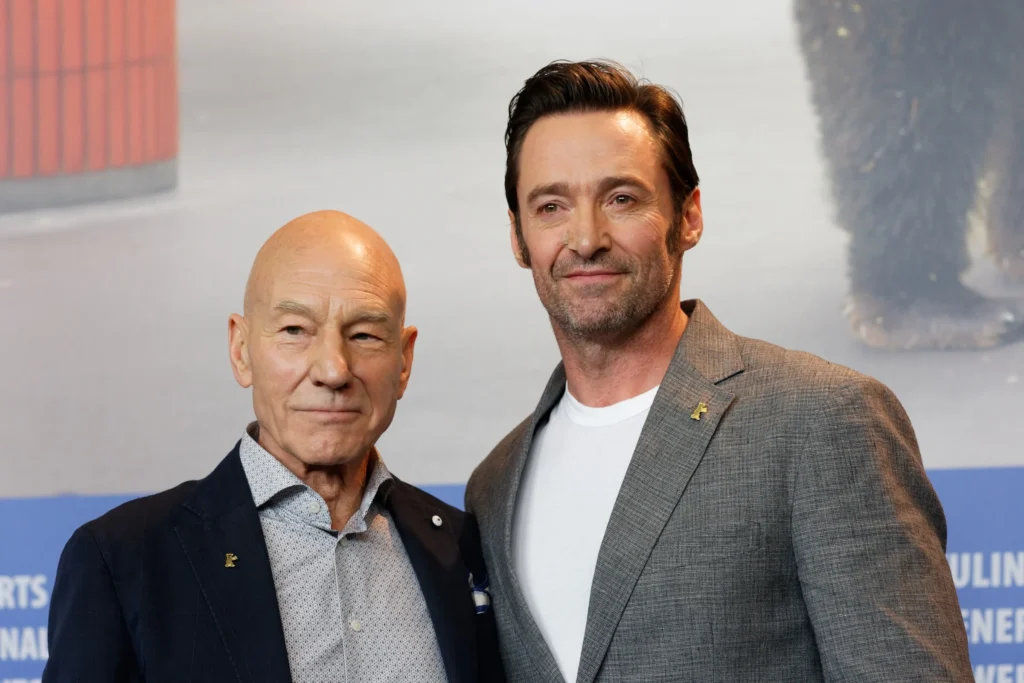
Patrick Stewart and Hugh Jackman at the Logan press conference during the 2017 Berlin International Film Festival. Photo: Maximilian Bühn / Wikimedia Commons — CC BY-SA 4.0.
For generations of LGBTQ+ fans, Patrick Stewart was much more than Captain Picard or Professor X. He was an ally who never seemed to understand why accepting other people’s identities should be particularly complicated.
Supporting gay rights was never a difficult decision
Long before celebrities routinely positioned themselves as LGBTQ+ allies, Stewart was comfortable expressing his support for gay and lesbian people.
In a revealing 2015 interview with The Advocate, the actor explained that his acceptance of LGBTQ+ people had developed naturally through his experiences in the theatre.
Working alongside gay and lesbian colleagues had never struck him as unusual. The theatrical world, with its diversity of personalities, identities and experiences, had helped shape his understanding of human relationships.
He described supporting gay civil rights as a natural choice, explaining that he had never needed to make a conscious ideological decision to embrace equality.
As his friendship with Ian McKellen developed, Stewart became increasingly involved in campaigns and public demonstrations supporting LGBTQ+ rights.
His position was straightforward: gay people deserved the same dignity, opportunities and freedoms as everyone else.
In 2015, during a public controversy involving a Northern Irish bakery and a cake carrying a message supporting same-sex marriage, Stewart reiterated his commitment to LGBTQ+ equality while arguing that freedom of expression also needed protection.
His position on that particular case divided opinion, but he insisted that his defence of individual freedom should not be confused with opposition to LGBTQ+ rights.
For Stewart, equality was something society should embrace and value.
Patrick Stewart and Ian McKellen: Hollywood’s most lovable friendship
It is almost impossible to discuss Patrick Stewart’s relationship with the LGBTQ+ community without mentioning Sir Ian McKellen.
The two British actors first crossed paths through the Royal Shakespeare Company in the 1970s, although their close friendship developed much later.
Their professional lives became intertwined when Stewart was cast as Professor Charles Xavier and McKellen as Magneto in the X-Men films.
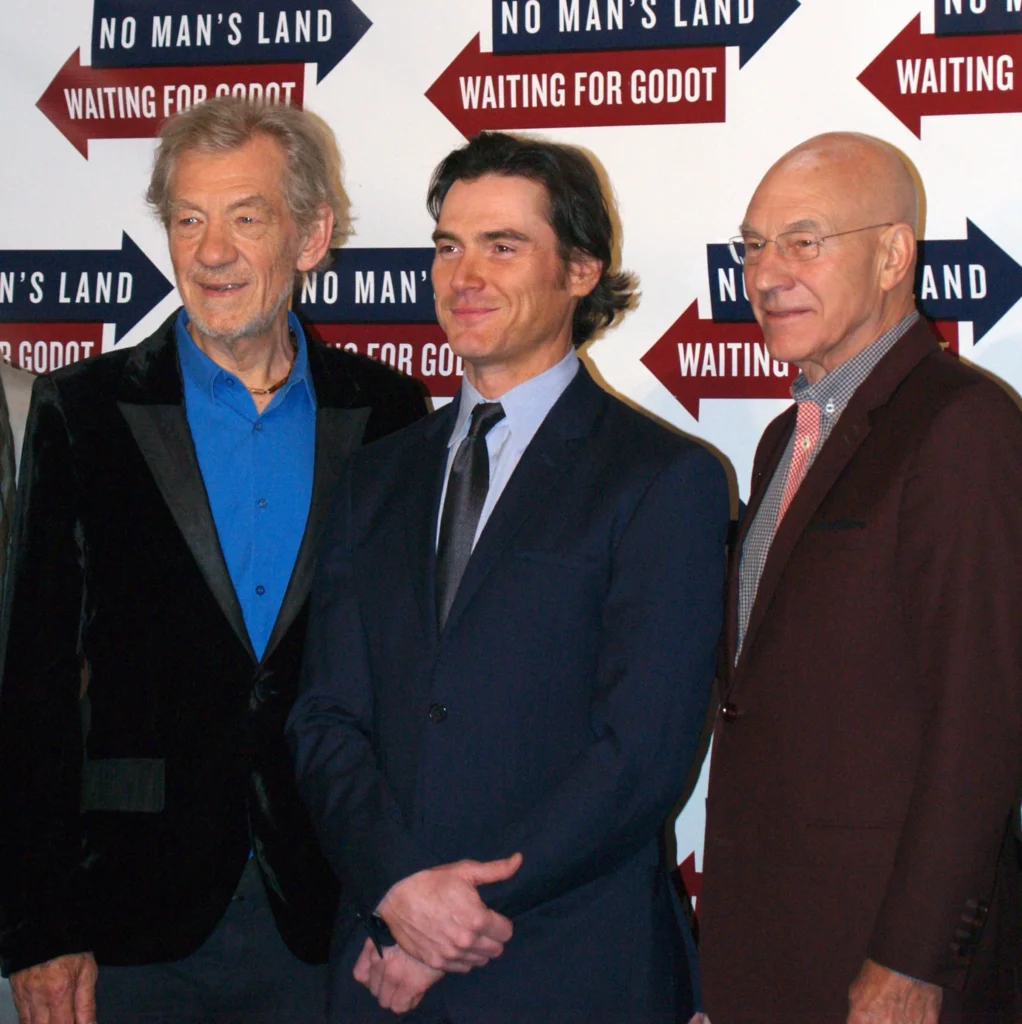
On screen, the two characters frequently found themselves on opposite sides of an ideological conflict. Off screen, the actors developed one of the entertainment industry’s most affectionate and entertaining friendships.
Their public appearances became legendary. They held hands, embraced, kissed, posed for photographs and delighted audiences with their playful interactions.
Their friendship challenged a familiar assumption about masculinity: that men, particularly heterosexual men, should somehow be uncomfortable expressing physical affection towards one another.
Stewart, who was heterosexual, never appeared particularly concerned about such expectations.
Their relationship was also refreshingly free from the awkwardness that can sometimes accompany public conversations about sexuality. Stewart and McKellen simply enjoyed each other’s company, and they were happy for everyone to see it.
In 2013, McKellen even officiated Stewart’s wedding to Sunny Ozell, having obtained the necessary authorisation to perform the ceremony.
Few celebrity friendships have managed to be quite so entertaining while also offering such a visible example of affection, loyalty and mutual respect between two men.
The time Patrick Stewart was mistakenly identified as gay
One particularly memorable episode revealed just how comfortable Stewart was with his association with the LGBTQ+ community.
In 2014, The Guardian mistakenly identified him as gay while reporting on his support for fellow X-Men actor Elliot Page, who had publicly come out at the time.
Rather than reacting with embarrassment or anger, Stewart found the mistake amusing.
McKellen reportedly sent him an email congratulating him on the unexpected development, adding another chapter to their long-running friendship.
Stewart responded with humour, joking on social media about having several heterosexual friends.
During his subsequent interview with The Advocate, he explained that he had actually felt flattered by the misunderstanding.
For an actor who had spent decades advocating acceptance, being mistaken for gay was hardly something he considered insulting.
The episode became another example of why LGBTQ+ audiences had developed such affection for him.
Ian McKellen’s heartbreaking farewell
Following the announcement of Stewart’s death, Ian McKellen shared a deeply personal tribute to his longtime friend on Instagram.
Recalling Stewart’s Yorkshire roots, his honesty and his remarkable acting career, McKellen described the qualities that had made their friendship so important.
He remembered a man who spoke openly about his feelings, remained loyal to his origins and approached life with sincerity.
McKellen also recalled having initially discouraged Stewart from accepting the role of Captain Picard in Star Trek: The Next Generation, fearing that years in Hollywood might derail his distinguished British theatre career.
Fortunately, Stewart ignored his advice.
The decision transformed him into an international star and introduced his work to generations of viewers who might otherwise never have discovered his theatrical achievements.
But the most moving part of McKellen’s tribute was not about Star Trek, Shakespeare or Hollywood.
It was about friendship.
“He wore his heart on his sleeve,” McKellen wrote, describing Stewart as someone he could depend on, admire and love.
The words captured something that fans had witnessed for decades: beneath the jokes, public kisses and entertaining photographs was a profound and enduring relationship.
Their friendship was never simply a publicity attraction. It was a genuine bond between two men who had shared much of their personal and professional lives.
A legacy that extended beyond the screen
Stewart’s support for human rights was not limited to LGBTQ+ equality.
Throughout his life, he also advocated for survivors of domestic violence, supported humanitarian causes and spoke openly about the impact of violence within his own childhood home.
His activism reflected a broader commitment to compassion, dignity and the belief that people should not have to live in fear.
His acting career occasionally intersected with LGBTQ+ storytelling, too. In 1995, he appeared in Jeffrey, a romantic comedy exploring gay relationships and the anxieties surrounding HIV/AIDS.
Decades later, Star Trek: Picard featured LGBTQ+ characters whose relationships formed part of a more inclusive vision of the franchise’s future.
It was consistent with the values that had long defined Star Trek: a belief in a future where differences between people need not become divisions.
For Stewart, those ideals were never confined to science fiction.
Goodbye to an extraordinary ally
Patrick Stewart will be remembered for his unmistakable voice, his commanding performances and the extraordinary characters he brought to life.
Captain Picard inspired generations with his intelligence and humanity. Professor Xavier offered audiences a powerful metaphor for tolerance, difference and acceptance.
But Stewart’s life away from the cameras frequently reflected those same values.
He supported LGBTQ+ equality, embraced friendships without worrying about conventional expectations of masculinity and demonstrated that affection between men should never require an explanation.
His relationship with Ian McKellen offered something particularly valuable: a public example of a heterosexual man and a gay man whose friendship was defined by love, humour and complete mutual acceptance.
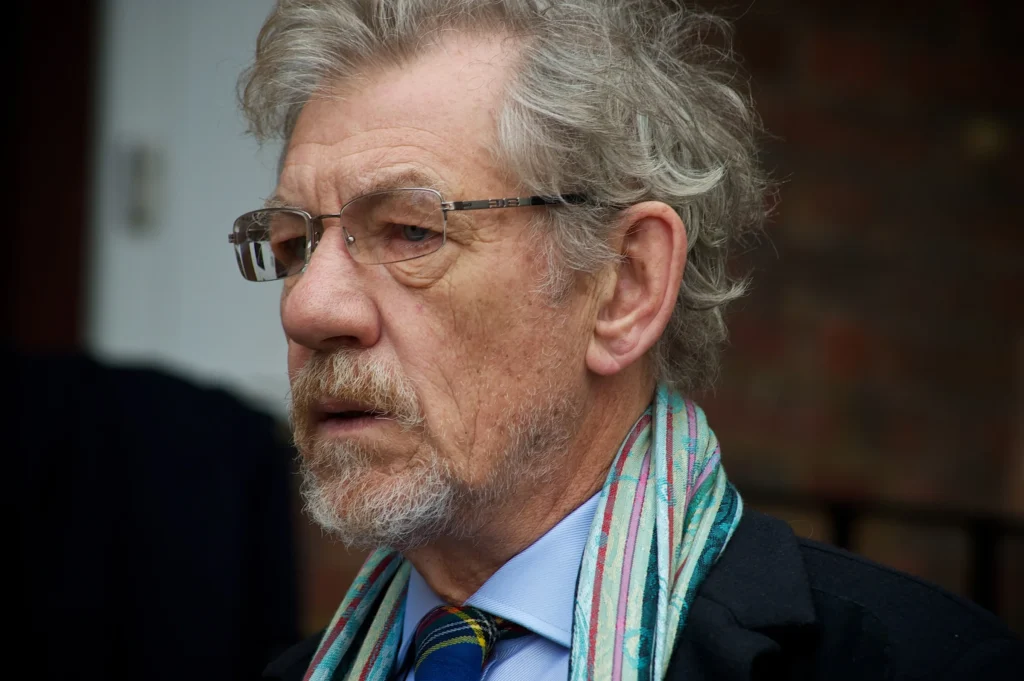
At a time when LGBTQ+ rights remain the subject of political conflict across the world, that example feels especially meaningful.
Hollywood has lost an extraordinary actor. The LGBTQ+ community has lost a genuine friend.
And Ian McKellen has lost someone he loved.

Leave a Reply