For decades, LGBTQ+ travel has had a familiar map. Amsterdam, Barcelona, Berlin, New York, London, Montréal, Sydney and San Francisco became almost obligatory stops for queer travellers looking for nightlife, community and the freedom to be themselves.
There is nothing wrong with the classics. But the queer travel map is changing.
As younger travellers look beyond traditional gay districts and increasingly combine nightlife with culture, food, design, nature and local community, destinations that were once peripheral to the international LGBTQ+ travel circuit are becoming considerably more interesting.
The result is not necessarily a new list of “gay capitals”. It is something more interesting: a much bigger queer world.
1. Cape Town, South Africa
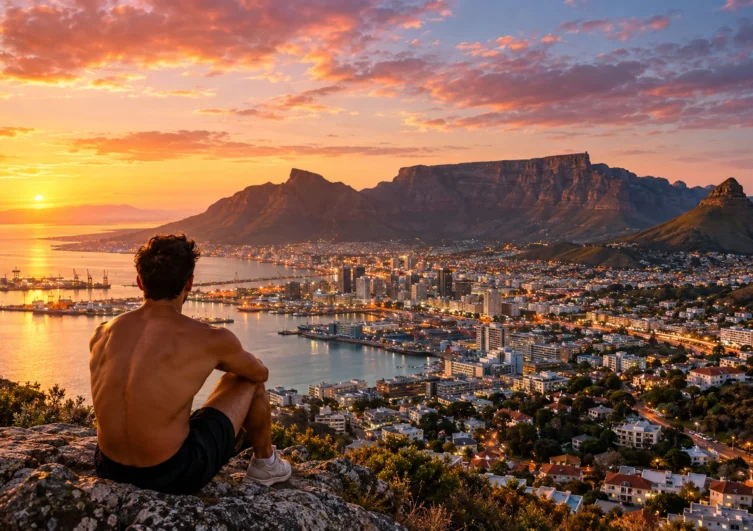
Cape Town has long been one of Africa’s most visible LGBTQ+ destinations, but its appeal goes far beyond its reputation as a gay-friendly city.
The combination is difficult to beat: beaches, mountains, vineyards, architecture, restaurants and one of the continent’s most established LGBTQ+ communities.
De Waterkant remains associated with queer nightlife and accommodation, while the city also offers something that traditional gay destinations increasingly struggle to provide: a holiday that does not revolve entirely around being gay.
You can spend the morning on Clifton Beach, visit the Winelands in the afternoon and still find a queer bar or event at night.
For international travellers, that combination makes Cape Town particularly compelling.
2. Mexico City, Mexico
Mexico City has quietly become one of the most important queer cultural centres in the Americas.
The city is enormous, chaotic and endlessly creative, and its LGBTQ+ scene reflects that diversity.
Zona Rosa remains the most recognisable queer neighbourhood, but limiting Mexico City’s LGBTQ+ culture to one district misses the point. Queer nightlife, art, fashion, drag, restaurants and independent cultural spaces are spread throughout the city.
It is also a destination where LGBTQ+ travel can feel less like entering a purpose-built gay bubble and more like becoming part of one of the world’s great cities.
3. São Paulo, Brazil
São Paulo does not always receive the same attention from international LGBTQ+ travellers as Rio de Janeiro, but that may be precisely why it deserves a closer look.
It is one of the world’s largest cities and home to one of the biggest Pride celebrations anywhere.
But São Paulo’s queer identity is not limited to one annual parade. Its LGBTQ+ culture intersects with nightlife, fashion, music, art and the city’s famously experimental food scene.
For travellers interested in the cultural side of queer life rather than simply beaches and nightlife, São Paulo offers something different.
4. Taipei, Taiwan
Taipei has become an increasingly important destination for LGBTQ+ travellers in Asia.
Taiwan’s historic role in LGBTQ+ rights in Asia has given Taipei a particular place in the region’s queer landscape, but the city’s appeal is also cultural.
Night markets, contemporary art, cafés, temples, technology and an increasingly visible queer scene coexist in a city that feels simultaneously modern and deeply rooted in tradition.
For travellers wanting an Asian destination where queer culture is visible without being the entire identity of the city, Taipei is difficult to ignore.
5. Melbourne, Australia
Sydney may be Australia’s internationally recognised LGBTQ+ capital, but Melbourne has a distinctly different personality.
Its queer culture is intertwined with art, music, fashion, cafés and independent nightlife.
The result is a city where LGBTQ+ travellers can experience queer culture without spending their entire trip inside explicitly LGBTQ+ venues.
And that may increasingly be what younger travellers are looking for: not just gay spaces, but cities in which queer life is part of the wider culture.
6. Lisbon, Portugal
Lisbon’s transformation into an international tourist destination has also changed its LGBTQ+ scene.
The city has long had a visible queer community, particularly around Príncipe Real, but the contemporary scene is increasingly dispersed across nightlife, restaurants, cultural spaces and neighbourhoods.
Its appeal is obvious to travellers who want a European city break with good weather, food, beaches within reach and a relatively relaxed social atmosphere.
Lisbon also benefits from being a gateway to Portugal’s wider LGBTQ+ travel scene from Porto to the Algarve.
7. Bangkok, Thailand
Bangkok has always had a significant LGBTQ+ presence, but the city is increasingly being considered alongside rather than beneath the traditional Western queer capitals.
Its nightlife is only one part of the picture.
Drag, fashion, entertainment, food and popular culture have created an LGBTQ+ scene that is increasingly visible internationally.
And with Thailand’s legal recognition of same-sex marriage, the country’s position on the global LGBTQ+ travel map has gained another dimension: queer travellers are not simply visiting for nightlife; they are travelling through a country where the legal landscape itself has changed.
8. Madrid, Spain
Madrid is hardly an undiscovered destination. Chueca has been one of Europe’s most recognisable LGBTQ+ neighbourhoods for decades.
But Madrid belongs on any conversation about the changing queer travel map precisely because it demonstrates how an LGBTQ+ district can become part of the mainstream identity of an entire city.
The question is no longer whether Madrid has a gay scene.
It is how much of Madrid’s wider cultural life has become intertwined with it.
9. Buenos Aires, Argentina
Buenos Aires has been one of Latin America’s most important LGBTQ+ destinations for years, but it remains surprisingly underrepresented in some European and North American travel conversations.
The city combines LGBTQ+ nightlife with architecture, theatre, tango, food and an enormous cultural scene.
Its queer identity also exists within a broader Latin American context that makes Buenos Aires particularly interesting for travellers who want to explore how LGBTQ+ culture develops differently outside the traditional Anglo-American model.
10. Copenhagen, Denmark
Copenhagen represents another side of the new queer travel map.
It does not necessarily offer the overwhelming scale of nightlife associated with Berlin or Madrid. Instead, LGBTQ+ life is woven into a city already known for design, food, cycling, architecture and quality of life.
For travellers who have moved beyond the idea that a “gay holiday” needs to mean clubs every night, Copenhagen makes a compelling case.
The future of queer travel may not be about gay cities
Perhaps the biggest change is not which cities are becoming popular.
It is what LGBTQ+ travellers increasingly expect from a destination.
The old model was relatively simple: find the gay neighbourhood, book the gay hotel, visit the gay bars and go home.
The newer model is much broader.
Travellers want to know whether they can be themselves, but they also want great restaurants, interesting neighbourhoods, culture, nature, design, local experiences and places that do not feel manufactured exclusively for tourists.
That does not mean the traditional LGBTQ+ capitals are disappearing.
It means the map is getting bigger.
And perhaps that is the most exciting development of all.
The future of queer travel may not belong to a handful of cities that have spent decades marketing themselves as LGBTQ+ destinations.
It may belong to the places where queer life has become part of something much larger.