

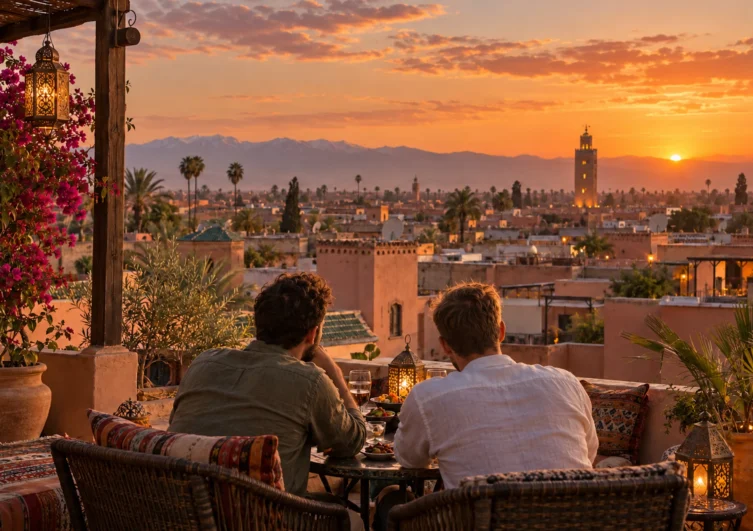
From intimate riads and candlelit dinners to cocktail bars in Guéliz, discovering a city of extraordinary hospitality, cultural complexity and a quieter queer scene.
There is a particular kind of magic to Marrakech that reveals itself slowly. A carved wooden door opens onto a courtyard scented with orange blossom. The noise of the souks fades behind thick walls. On a rooftop, as the last light turns the city’s terracotta façades the colour of embers, the call to prayer travels across the rooftops.
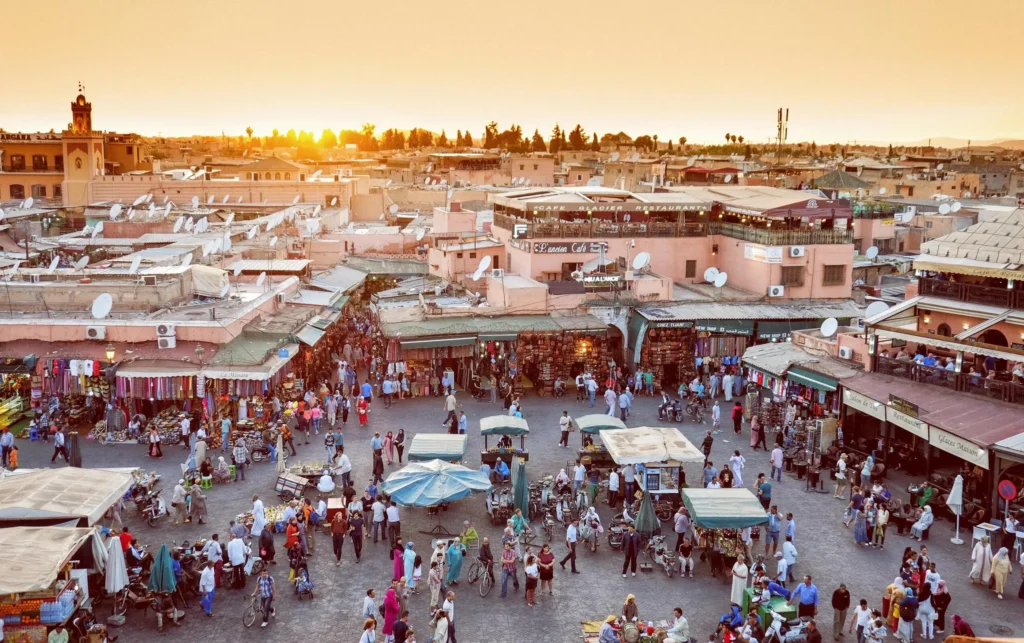
Marrakech is a city of interiors, of places that reward curiosity and of experiences that feel intensely personal. For LGBTQ+ travellers, this intimacy can be part of its appeal. Yet beneath the international glamour of its boutique hotels, design-led restaurants and cocktail bars lies a more complicated reality: Morocco remains a country where same-sex sexual activity are criminalised.
To explore Marrakech through an LGBTQ+ lens is therefore to embrace two truths at once. It is possible to experience extraordinary hospitality and find welcoming spaces, but the city cannot be understood as an openly queer destination in the European sense. Its beauty, its contradictions and its limits are all part of the story.
Homosexuality in Morocco: a changing conversation, an unchanged law
Homosexuality in Morocco is not a new phenomenon, nor is LGBTQ+ identity something that arrived with international tourism. What has changed over time is the visibility of the conversation, the emergence of advocacy networks and the willingness of some people to challenge the stigma surrounding sexual orientation and gender identity.
Morocco’s Penal Code, adopted in 1962, includes Article 489, which criminalises sexual acts between people of the same sex, with penalties of six months to three years in prison and a fine. Same-sex couples have no legal recognition as couples, and comprehensive protections against discrimination on the grounds of sexual orientation or gender identity remain absent.
Over recent decades, online platforms, independent voices and human rights organisations have helped bring LGBTQ+ issues into wider public discussion. Activists have challenged discrimination and called for legal reform, often in difficult circumstances. Nevertheless, greater visibility should not be confused with legal progress: Article 489 remains in force in 2026.
For visitors, the distinction matters. A hotel may welcome an international same-sex couple without hesitation, while the same couple may feel the need for greater discretion in public. For Moroccan LGBTQ+ people, the stakes can be considerably higher.
This is why the idea of an LGBTQ+-friendly Marrakech deserves a thoughtful definition. Rather than searching for a gay neighbourhood that does not exist, travellers are more likely to discover a network of internationally minded hotels, restaurants and private hospitality spaces where discretion and respectful service are valued.
Where to stay: the art of finding your own sanctuary
In Marrakech, the riad is more than a place to sleep. It is an architectural expression of privacy, a world organised around an interior courtyard, where the rhythm of the city gives way to the slower rituals of hospitality.
For LGBTQ+ travellers, choosing the right address can shape the entire experience. These properties offer distinctive settings and international hospitality, although their inclusion here should not be interpreted as a formal LGBTQ+ certification.
Riad Due: contemporary character behind a traditional door
There is something appealing about the contrast at Riad Due, an intimate property in the heart of the medina. Its approach combines Moroccan heritage with contemporary design and an eclectic collection of art, creating a retreat that feels personal rather than imposing.
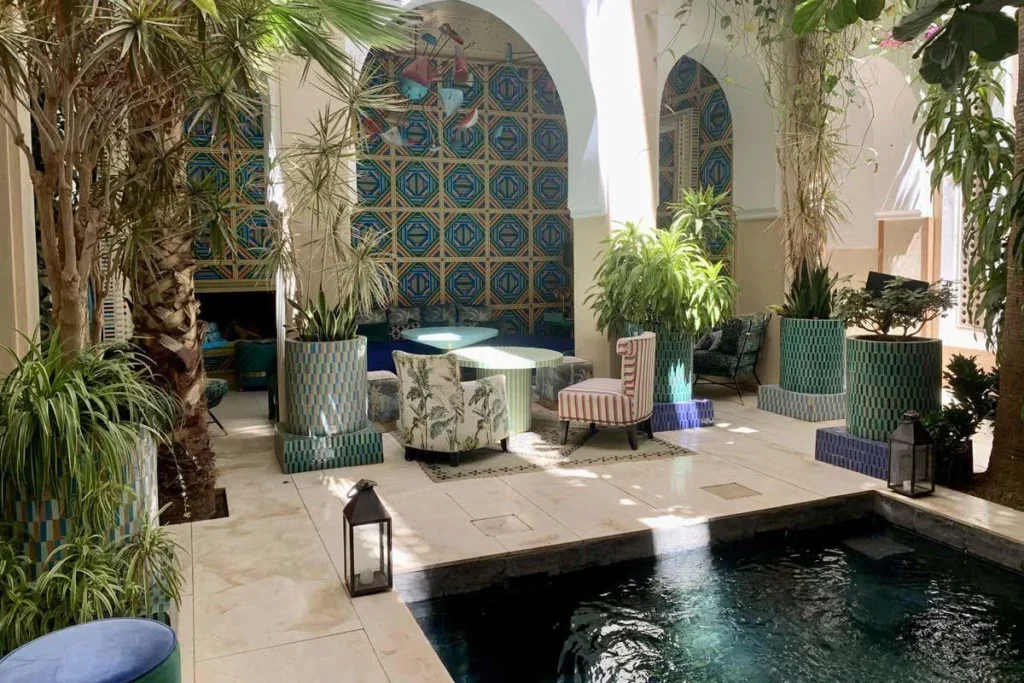
After a day spent navigating the souks, the riad offers a quieter rhythm: time to appreciate the interiors, enjoy Moroccan cuisine or retreat to the terrace as the light softens over the city.
Its small scale and emphasis on personalised experiences make it an interesting option for travellers seeking a more intimate stay.
Le Mellah Hotel: a story rooted in place
Some of Marrakech’s most compelling places are those that feel inseparable from their surroundings. Le Mellah Hotel, in the historic Mellah district, offers a base for discovering a part of the medina shaped by centuries of Jewish and Moroccan history.
Away from some of the busiest tourist routes, the neighbourhood rewards those who prefer to explore on foot, observing daily life and discovering the markets and streets of the southern medina.
For travellers drawn to places with a sense of history and character, Le Mellah offers a different perspective on the Red City.
El Fenn: art, colour and a cosmopolitan spirit
Few Marrakech properties capture the city’s contemporary creative energy quite like El Fenn. A collection of interconnected riads, it brings together bold colours, modern art, vintage furniture and generous courtyards in a setting that feels closer to a private art collection than a conventional hotel.
Its rooftop is one of its defining spaces, offering views across the medina towards the Koutoubia Mosque. It is the kind of place where a long afternoon can turn into sunset drinks without the need to leave the property.
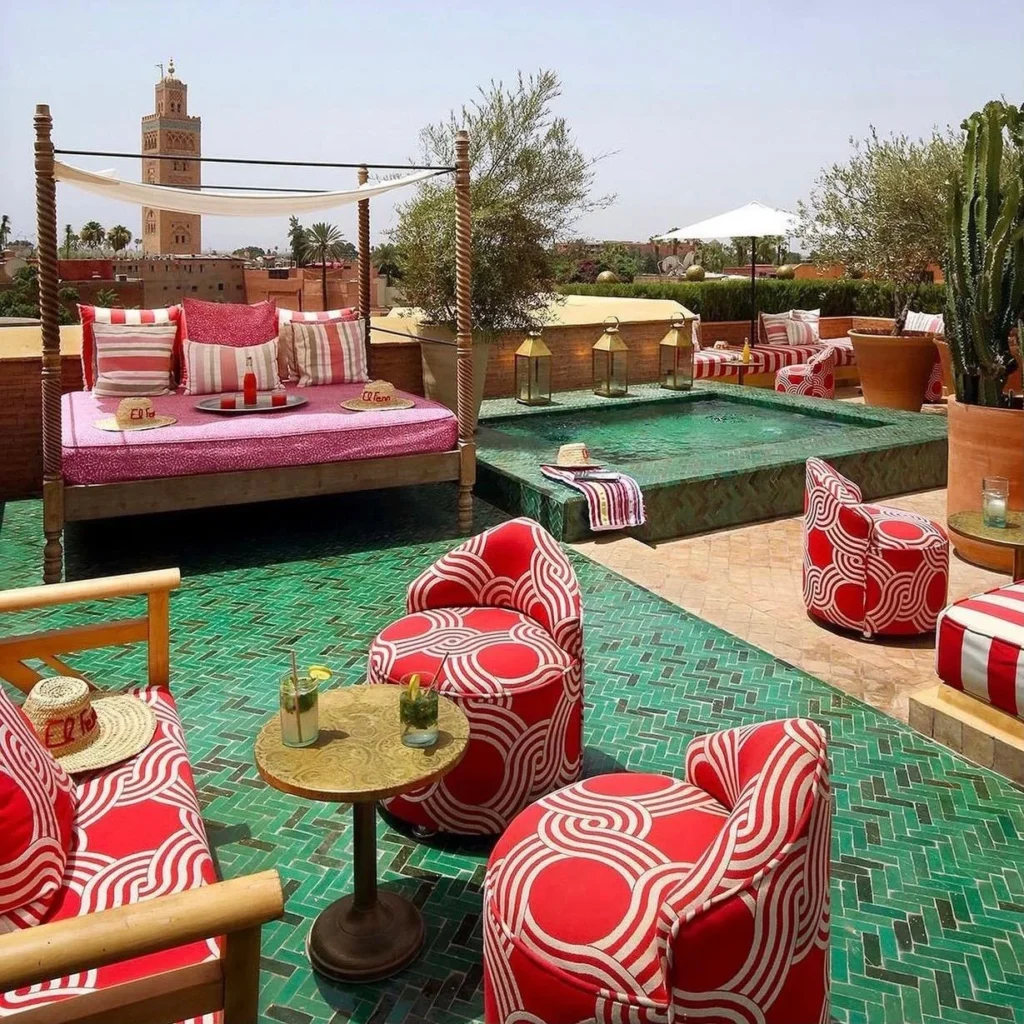
For travellers who appreciate design, fashion and a cosmopolitan atmosphere, El Fenn is a compelling address.
Royal Mansour: privacy elevated to an art form
At Royal Mansour, hospitality is conceived on an extraordinary scale. Guests stay in individual private riads rather than conventional hotel rooms, with carefully considered service connecting each residence to the wider property.
Gardens, elaborate Moroccan craftsmanship, a spa and fine dining complete the picture. It is an option for travellers seeking a secluded retreat where the emphasis is on privacy and personalised attention.
Es Saadi Marrakech Resort: a different side of the city
For those who prefer the amenities of a resort, Es Saadi Marrakech Resort offers an alternative to the intimacy of a traditional medina riad. Set in the Hivernage district, it combines gardens, pools, wellness facilities and dining within a larger hospitality complex.
Its location is convenient for exploring the modern city and its restaurants and bars, while offering space to retreat from the intensity of the old town.
Restaurants: Marrakech through the pleasure of the table
Food is one of the most rewarding ways to understand Marrakech. The city’s culinary identity is rooted in Moroccan traditions, yet its restaurant scene has evolved to embrace international influences, contemporary interiors and a new generation of creative hospitality.
For LGBTQ+ travellers, established restaurants accustomed to welcoming international guests can be a useful starting point. That does not automatically make them LGBTQ+-owned or formally inclusive, but it may offer a more familiar hospitality environment.
Al Fassia: a celebration of Moroccan tradition
At Al Fassia, Moroccan cooking takes centre stage. The restaurant is particularly known for its connection to the cuisine of Fez and its long-standing women-led identity.
Expect richly flavoured tagines, pastilla and dishes that demonstrate the depth of the country’s culinary traditions. In a city increasingly associated with fashionable rooftops and international menus, Al Fassia is a reminder that the most memorable meals often begin with recipes perfected over generations.
Nomad: contemporary Morocco above the medina
Nomad offers a modern interpretation of Moroccan cuisine, combining local ingredients and traditional references with a contemporary approach to presentation and design.
Its terraces look across the medina, making it an appealing place for a late lunch or an early dinner as the city changes colour. It attracts an international crowd interested in food, architecture and the visual culture of Marrakech.
Café Arabe: an intimate pause between explorations
For a slower meal, Café Arabe brings together Moroccan and Italian influences in a relaxed setting within the medina.
Its terrace is particularly inviting after a morning spent exploring the souks. The atmosphere is informal enough for a spontaneous lunch, yet the setting retains the sense of escape that makes dining in Marrakech so distinctive.
Riad Due: dining in a more intimate setting
For guests who prefer to keep the evening close to home, Riad Due offers the possibility of a more personal dining experience. Rather than the social spectacle of a busy restaurant, the appeal lies in a quieter atmosphere and the opportunity to enjoy Moroccan hospitality at a slower pace.
After dark: cocktails, rooftops and Marrakech’s international crowd
Marrakech does not have a well-established public gay-bar district comparable to those found in Lisbon, Madrid or Berlin. Its LGBTQ+ social life is more discreet, and international visitors tend to encounter the city through hotel bars, restaurants, mixed nightlife venues and private gatherings rather than dedicated queer spaces.
There are, however, several addresses worth knowing. Some are mentioned in LGBTQ+ travel guides or are popular with international visitors, but it is important to distinguish between a mixed venue that may welcome LGBTQ+ customers and a bar that explicitly identifies as queer.
Le 68 Bar à Vin: an intimate stop in Guéliz
Away from the medina’s winding lanes, Le 68 Bar à Vin offers a different side of Marrakech. Located in the modern Guéliz district, it is known for its wine-bar atmosphere and international clientele.
Its more intimate setting makes it an option for an unhurried drink and conversation. It has been identified in LGBTQ+-oriented travel listings as a place to consider, although it is not an exclusively gay bar. Check its current opening hours before visiting.
L’Envers: an urban evening
L’Envers, in Guéliz, offers another option for travellers interested in the city’s contemporary bar scene. With a more urban atmosphere, it can be a useful stop for those looking beyond the traditional rooftop experience.
It has appeared in listings aimed at LGBTQ+ visitors, but its audience and atmosphere may vary. It should be approached as a mixed venue rather than a dedicated queer space.
Kabana Rooftop: cocktails above the city
For a more visual experience, Kabana Rooftop combines cocktails, music and open-air views. It is a place to watch the light fade over Marrakech before the evening moves elsewhere.
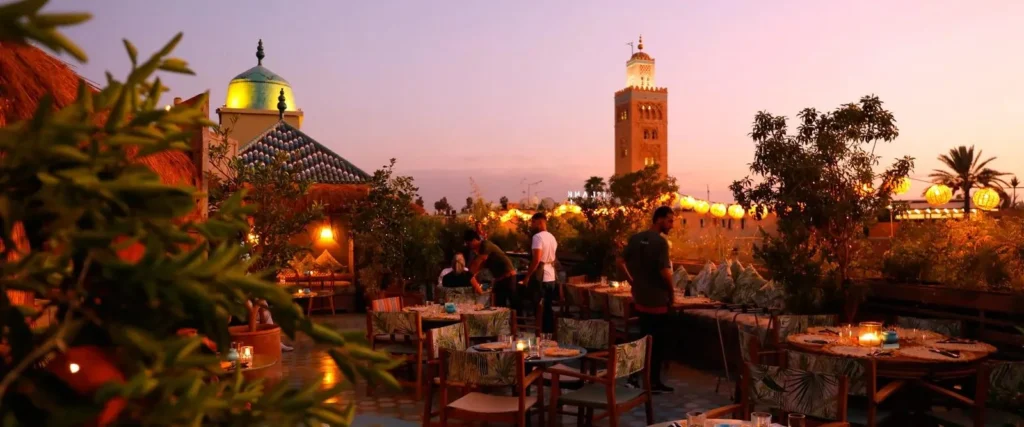
Although not a gay bar, its international crowd makes it an option for visitors who enjoy lively rooftop settings. Check the current programme, reservations and entry arrangements before going.
Comptoir Darna: dinner becomes an occasion
Comptoir Darna is one of Marrakech’s best-known addresses for an evening that extends beyond the meal itself. The combination of food, cocktails, music and live entertainment creates an atmosphere that feels celebratory and theatrical.
It is a natural choice for those who enjoy dressing for dinner and making an evening of it. The venue is mentioned in gay travel guides as a place popular with some LGBTQ+ visitors, but it is not an exclusively queer venue.
Bar Churchill: timeless elegance
Inside La Mamounia, Bar Churchill represents the classic hotel-bar experience: polished interiors, carefully prepared cocktails and an atmosphere built around conversation rather than spectacle.
It is a place for a slower evening, perhaps after dinner, when the appeal lies in the setting and the ritual of a well-made drink.
Barometre: contemporary mixology
For those who prefer inventive cocktails to traditional hotel lounges, Barometre offers a contemporary take on Marrakech’s drinking culture. Its urban character contrasts with the traditional interiors of the medina, making it an alternative for an evening in the modern city.
Check current opening times and reservations before visiting.
A note on gay nightlife: these venues are not all gay bars, and none should be assumed to provide formal LGBTQ+ protection simply because they attract international visitors. There is no guarantee that a particular venue will have a queer crowd on any given night. For current listings and community-oriented travel information, consult Queer Atlas and verify details directly with venues before making plans.
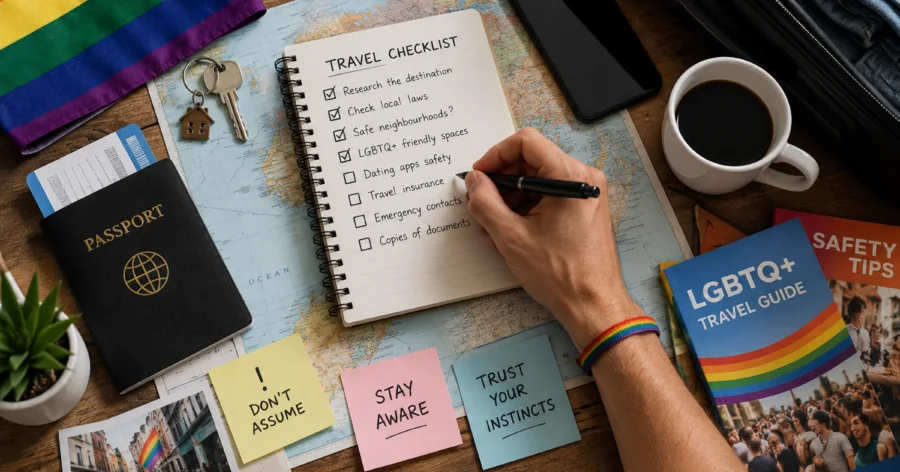
Practical LGBTQ+ travel guide to Marrakech
– Know the law. Article 489 of Morocco’s Penal Code criminalises sexual acts between people of the same sex, with penalties of six months to three years in prison and a fine. The law remains in force as of 2026.
– Choose accommodation carefully. Contact your hotel or riad directly if you have questions about room arrangements, privacy or its experience welcoming same-sex couples. An international reputation does not guarantee a formal LGBTQ+ policy.
– Be mindful of public displays of affection. In the current legal and social environment, public displays of same-sex affection may attract unwanted attention and carry additional risks. Consider your surroundings and personal comfort.
– Plan your evenings. Marrakech has international cocktail bars, hotel lounges and restaurants, but no well-established, openly gay nightlife district comparable to those in many European capitals. Check venue details and events before heading out.
– Protect your privacy. Use care when sharing photographs, identifying information or location details on dating apps and social media. Avoid assuming that digital conversations or profiles are private.
– Keep essential contacts handy. Save your accommodation details, travel insurance information and your country’s embassy or consulate contact details. Know how to reach local assistance if needed.
– Respect the local community. The experience of an international visitor staying in a luxury hotel is not necessarily representative of the daily realities of LGBTQ+ Moroccans. Travel with awareness of the distinction between tourist hospitality and local legal protections.
– Before travelling, consult your government’s latest Morocco travel advice and current human-rights information. Laws and local circumstances can change.
Beyond the label
Perhaps the most interesting question is not whether Marrakech can be labelled LGBTQ+-friendly, but what that label means in a place where hospitality, privacy and personal freedom do not always occupy the same space.
The city offers extraordinary experiences: mornings in the medina, afternoons among contemporary art and traditional craftsmanship, dinners that stretch into the evening, and riads where the noise of the world seems to disappear behind a wooden door.
It also offers opportunities to find welcoming people and spaces, from the intimacy of Riad Due to the creative atmosphere of El Fenn and the international bar scene of Guéliz. For some travellers, these experiences can make Marrakech feel unexpectedly comfortable and open.
At the same time, the legal reality must remain part of the conversation. Morocco continues to criminalise same-sex sexual activity, and the growing visibility of LGBTQ+ travellers in its international tourism scene does not erase the challenges faced by the local community.
For those who choose to visit, Marrakech can be experienced as a city of remarkable beauty, cultural depth and memorable hospitality. Its most meaningful welcome, however, is one approached with open eyes: appreciative of the people and places that make the city extraordinary, and honest about the limits that still shape the lives of those who call it home.
Leave a Reply