

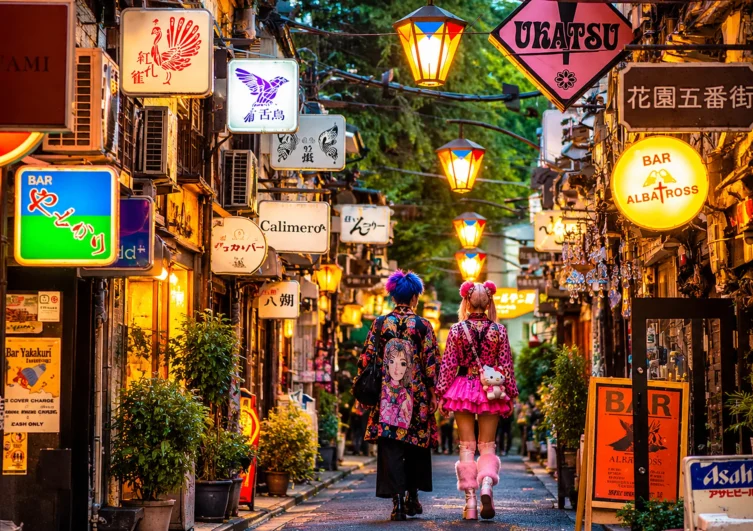
Tokyo is a city that seems to operate in a universe of its own. Everything is meticulously organised, everyone seems unfailingly polite, and even the toilets have more technology than my first computer. But somewhere in the middle of all that Japanese efficiency lies Shinjuku Ni-chōme, Tokyo’s famous gay neighbourhood, where things get considerably more colourful. I decided to spend a day roaming around this fantasy neighbourhood to check what Tokyo’s gay hub actually looks like.
Imagine Hello Kitty meeting Tamagotchi, the two deciding to throw a party, and the dress code being whatever the hell you want. That’s more or less how I’d describe an afternoon and evening exploring gay Shinjuku.
Getting there is relatively simple. From Shinjuku-sanchome subway station, exit C8 puts you within a few minutes’ walk of the neighbourhood. Hanazono-dori leads towards Naka-dori, one of Ni-chōme’s main nightlife streets, where a bewildering collection of little bars, cafés and clubs occupies practically every available corner, basement and upper floor.
The first thing that struck me was the people. Extraordinary hairstyles, unconventional outfits, colours and combinations that would make most European fashion designers question their career choices. Some looked like they’d stepped out of an anime series, others like they’d invented their own entirely. And somehow, nobody seemed particularly bothered.
There were noticeably more Japanese people than tourists, although the crowd was certainly mixed. And despite Ni-chōme’s reputation as Tokyo’s gay capital, you shouldn’t assume everyone wandering its streets is gay. As my own experience demonstrated, attempting to identify someone’s sexuality by their hairstyle is not a particularly scientific exercise.
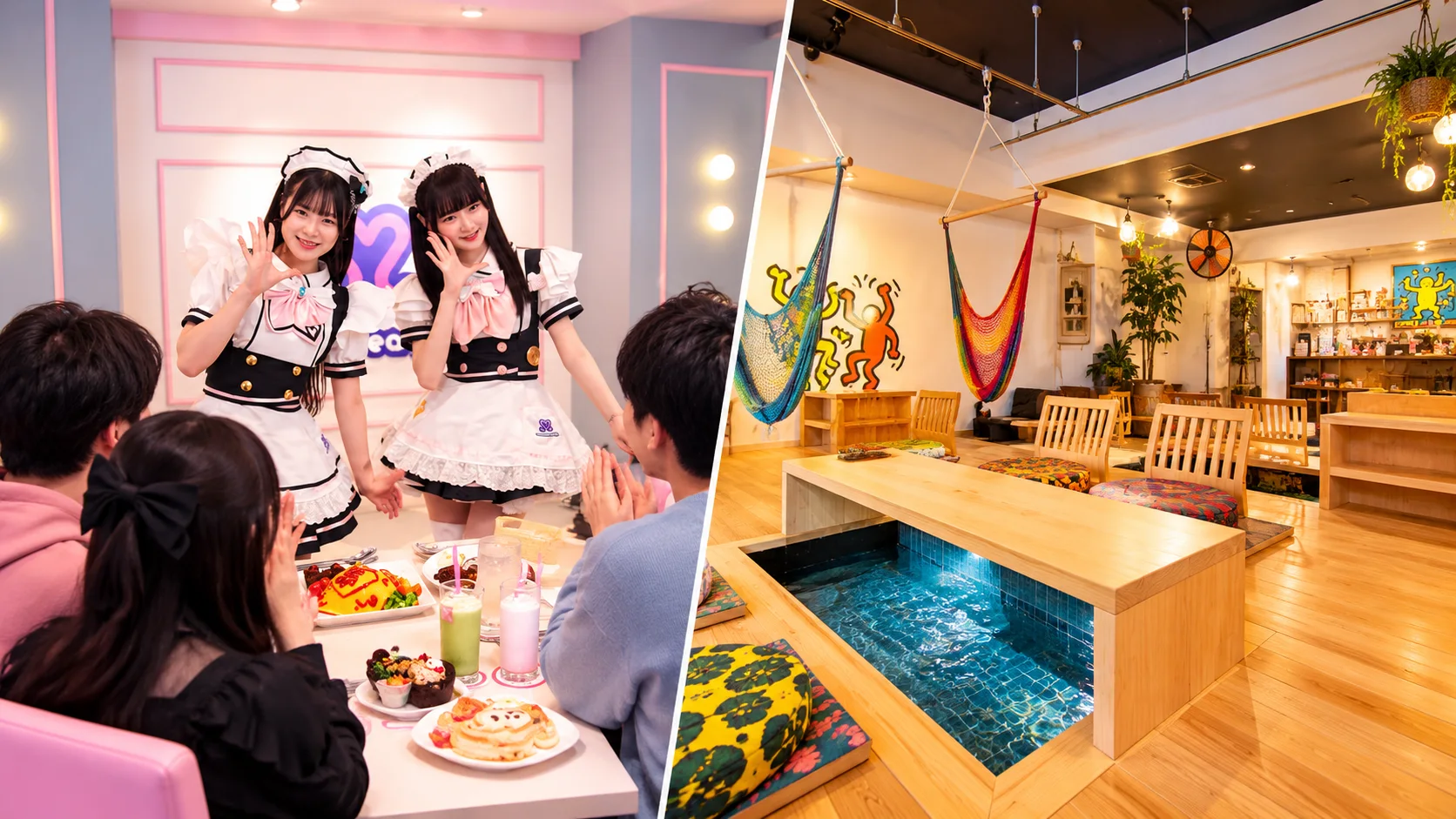
For anyone planning to spend the afternoon here, the neighbourhood offers considerably more than drinking. There’s Donyoku, an LGBTQ-friendly café where you can enjoy coffee and a Vietnamese bánh mì while soaking your feet in a Japanese footbath. Because apparently Japan has decided that even sitting down for a coffee isn’t relaxing enough. Alternatively, a short detour takes you to maidreamin, one of Tokyo’s famous maid cafés, where waitresses dressed in elaborate maid costumes serve colourful food and drinks in an atmosphere straight out of a Japanese fantasy. It’s not marked as LGBTQ exactly, but it’s definitely as camp as you can get.
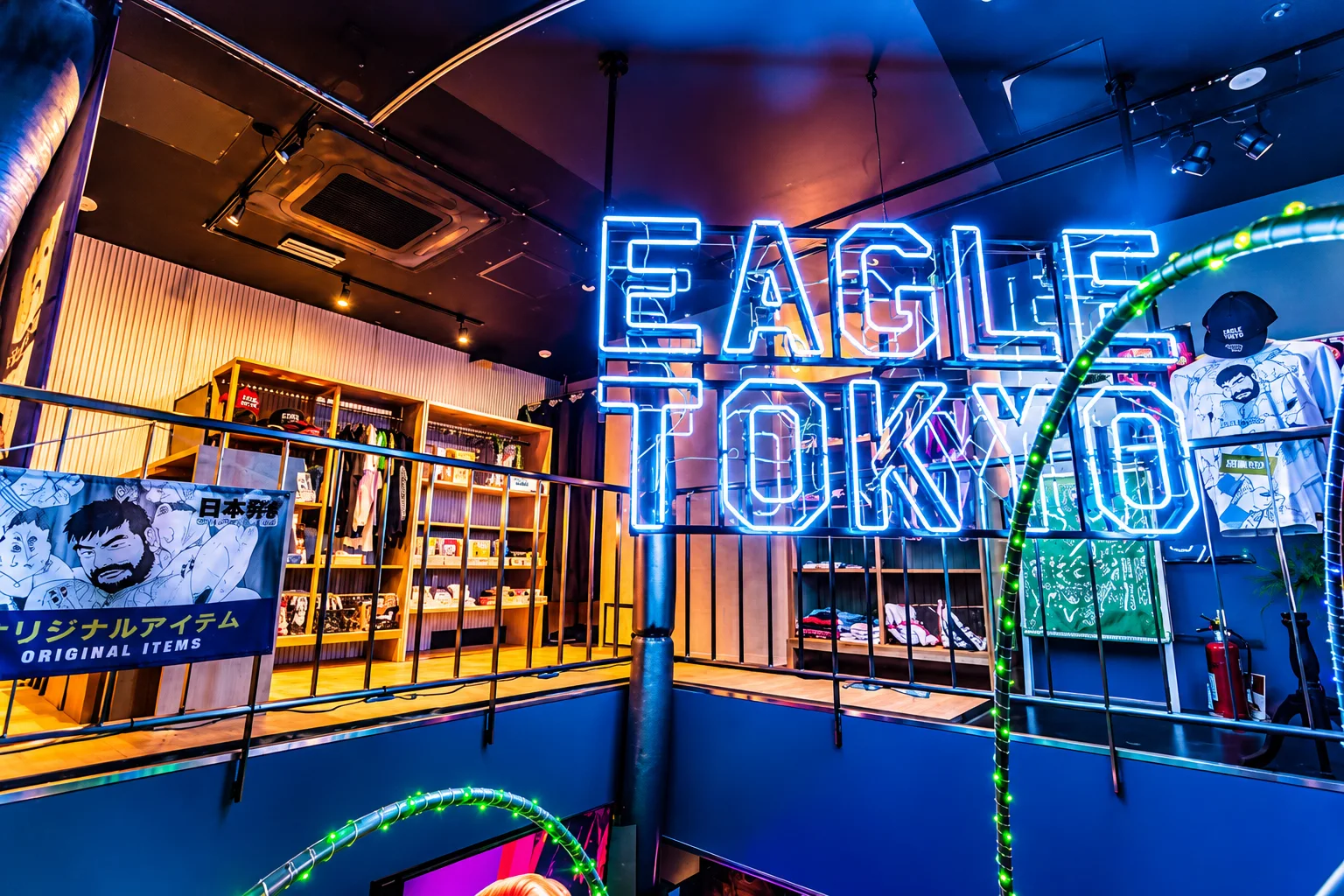
And if shopping is more your thing, Ni-chōme has a few establishments unlikely to feature in your average family holiday brochure. Starting near Shinjuku-sanchome’s C8 exit, there’s CHECK, a shop specialising in gay magazines, DVDs, fetish underwear and adult toys. A little further along Naka-dori, Lumiere continues the theme with magazines, manga and other rather grown-up souvenirs. From there, a short detour takes you to the third floor of the Shinohara Building, home to Wear_EverXXX, where brands like Andrew Christian and Addicted sell swimwear, sportswear and underwear with approximately the same amount of fabric as a postage stamp. Finally, heading towards EAGLE TOKYO BLUE, you’ll find EAGLE TOKYO STORE, offering official merchandise, gay artwork and bara-inspired illustrations and souvenirs. Who needs another fridge magnet when you can bring home a beautifully illustrated muscular Japanese man?
As evening approaches, the nightlife begins taking over. AiiRO Café, on Naka-dori, is one of the area’s most recognisable establishments, thanks to its rainbow-coloured torii gate and open frontage. It’s the kind of place where the distinction between bar and street becomes increasingly theoretical. A little further around the neighbourhood, Alamas Café serves tacos and cocktails, proving that even in the middle of Tokyo’s gay district, there’s always room for a little Mexico.
For those looking for something livelier, Dragon Men attracts a mixed Japanese and international crowd with dancing and music, while Eagle Tokyo Blue offers a different take on the gay bar experience, with a bear-friendly reputation. If dancing is the objective, Arty Farty is one of the district’s established dance bars, and AiSOTOPE Lounge hosts larger LGBTQ nightlife events. I can’t personally review their drinks, bartenders or dance floors, but these are certainly names worth knowing before heading out.
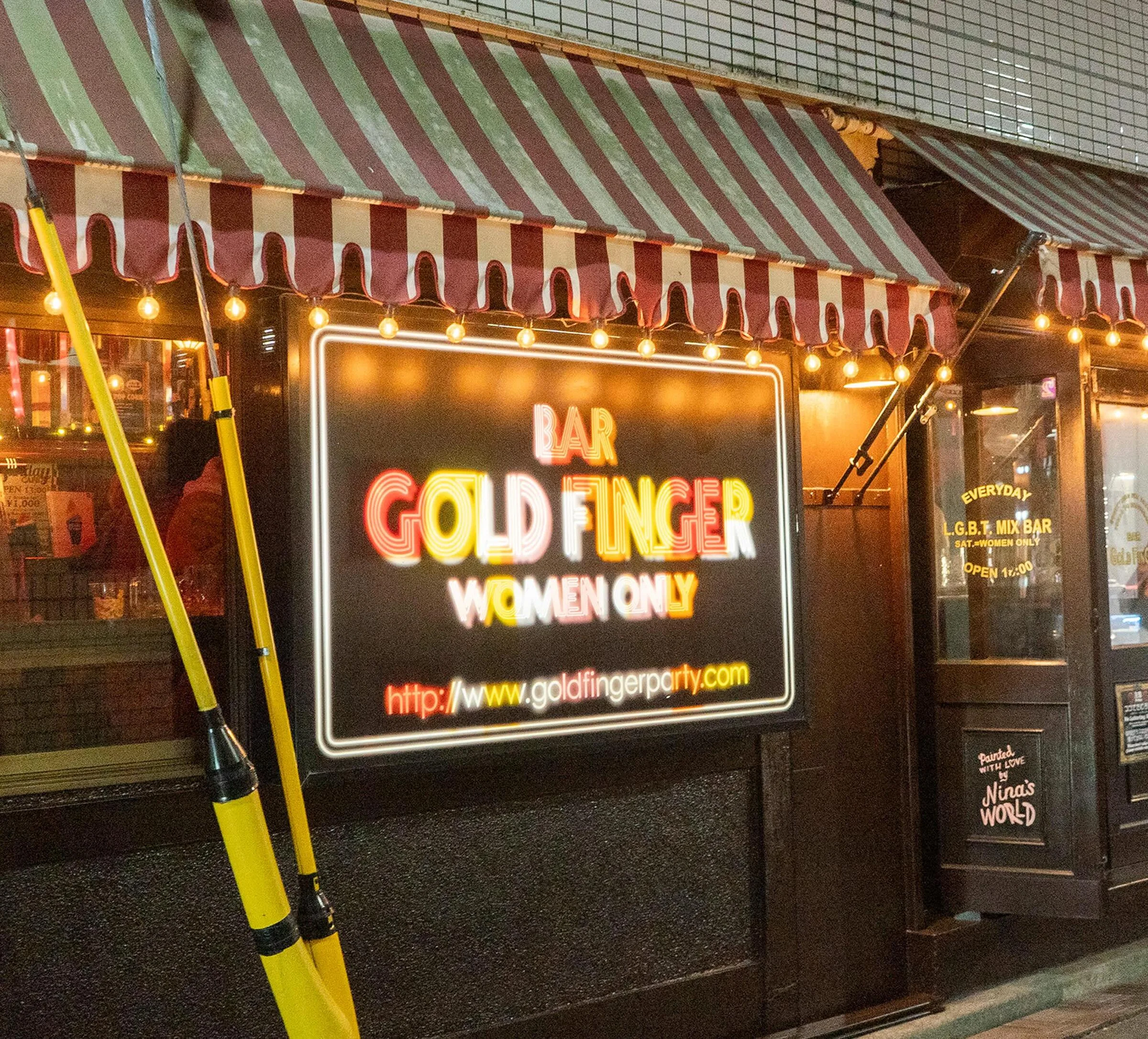
And then there’s Gold Finger, a lesbian bar in Ni-chōme. Yes, Gold Finger. I didn’t go inside, but I couldn’t help admiring the name. James Bond would be proud. I’m just not sure why they didn’t go all out and call it Pussy Galore.
One of the more fascinating things about Ni-chōme is how many of its bars are tiny, sometimes accommodating barely a dozen customers. Some cater to particular communities, age groups or regular clientele, while others enthusiastically welcome everyone. It’s worth checking who a venue welcomes before walking in, along with any seating charges. And photography deserves a little discretion. Not everyone enjoying Tokyo’s queer nightlife necessarily wants to appear in a stranger’s holiday album.
What I particularly enjoyed was the sense of individuality. Japan is often portrayed as a society built around conformity, social rules and not standing out. Yet here was a neighbourhood where standing out seemed to be half the point. As daylight faded and the streets became livelier, Ni-chōme felt like a little universe with its own rules, fashions and social rituals.
I couldn’t tell you the names of every establishment I wandered past, and my gaydar certainly didn’t become any more reliable. But sometimes travelling isn’t about ticking off attractions or collecting Tripadvisor recommendations. Sometimes it’s simply about getting wonderfully distracted by a place.
And gay Shinjuku certainly knows how to distract.
Hello Kitty would have loved it. Tamagotchi probably wouldn’t have survived the night.
Leave a Reply