

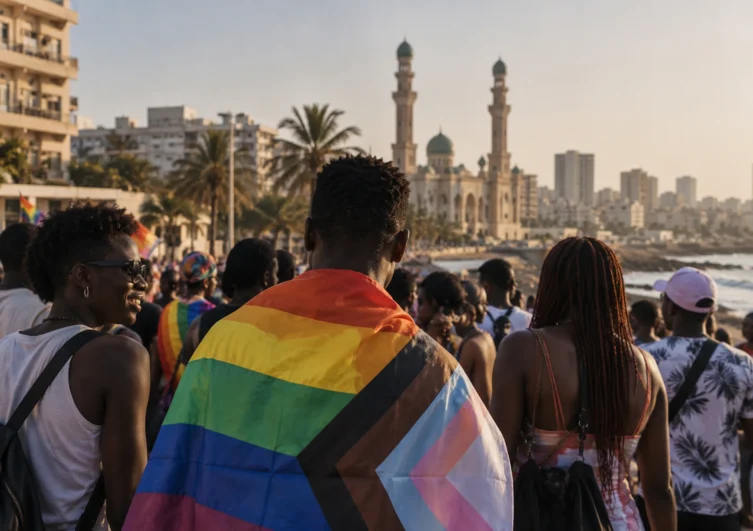
A growing crackdown on LGBTQ+ people in Senegal has driven members of the community into hiding, disrupted access to HIV treatment and left some detainees struggling to find lawyers willing to defend them. A new investigation published by Human Rights Watch on October 12 describes a climate of fear following the introduction of tougher anti-homosexuality legislation earlier this year.
The findings come just weeks before Senegal hosts the Youth Olympic Games, raising questions about how the country intends to reconcile its treatment of LGBTQ+ citizens with the non-discrimination principles of the Olympic movement.
Hundreds arrested under Senegal’s anti-LGBTQ+ laws
On March 11, Senegal’s National Assembly approved amendments to Article 319 of the penal code, doubling the maximum prison sentence for consensual same-sex sexual activity from five to ten years. The legislation also introduced penalties of up to seven years for activities considered to promote homosexuality or support LGBTQ+ people and organisations.
The changes passed with overwhelming parliamentary support, receiving 135 votes in favour, none against and three abstentions. Although same-sex sexual activity has been criminalised in Senegal since 1965, the new provisions have expanded the potential consequences for LGBTQ+ people and those who assist them.
Human Rights Watch says it could not independently establish the total number of arrests. However, figures collected by the Senegalese human rights organisation RADDHO indicate that at least 212 people were arrested between February and July, while the HIV Justice Network documented more than 300 arrests during the same period.
The arrests have taken place in Dakar and several other cities, with authorities reportedly using information obtained from confiscated mobile phones, allegations made by third parties and searches of private premises to identify suspects.
People are abandoning their homes and disappearing from public life
Beyond the arrests, the investigation describes how the fear of being identified as LGBTQ+ has transformed everyday life. People interviewed by Human Rights Watch reported avoiding public spaces, abandoning their phones, withdrawing from social media and leaving their homes or communities to escape threats.
One 21-year-old man who had previously been detained said he was warned not to return to his family home because relatives were threatening violence. He described withdrawing from online groups and losing contact with friends who had fled to neighbouring countries.
Another man, aged 35, described the distress of discovering that his partner had crossed the border at night after learning that friends had been arrested. According to his account, his partner left without his medication and was living in difficult conditions.
The consequences are also being felt among community organisations. A 27-year-old worker in Dakar told researchers that activities had been suspended, including online outreach, because members no longer felt they could trust one another.
For many LGBTQ+ Senegalese, the possibility of arrest is no longer an abstract threat. It has become a factor in decisions about where to live, whom to meet and whether to seek help.
Forced HIV testing is creating a public health crisis
One of the investigation’s most serious findings concerns reports of HIV tests being carried out on detainees without their informed consent. Human Rights Watch says positive results have subsequently been used to justify additional criminal charges, including allegations of deliberate HIV transmission.
The organisation also documented concerns about confidential medical information appearing in media coverage of criminal investigations. Such disclosures can expose individuals to discrimination, threats and rejection by their families, regardless of whether they are eventually convicted of any offence.
Health professionals interviewed by researchers warned that the crackdown is discouraging people from accessing essential medical services. A doctor in Dakar reported that approximately one-third of patients who had previously attended HIV treatment appointments were no longer coming.
The implications extend beyond LGBTQ+ rights. When people fear that a medical appointment or test result could expose them to criminal investigation, efforts to prevent HIV transmission and maintain access to treatment become considerably more difficult.
In August, a Senegalese court dismissed charges relating to alleged deliberate HIV transmission and endangering others in a major case involving dozens of defendants. However, 71 people remained referred for trial on other charges, including alleged same-sex sexual activity.
Even finding a lawyer has become difficult
The new legislation has also created uncertainty for legal professionals. Because supporting or promoting homosexuality can itself carry criminal penalties, some lawyers fear that defending LGBTQ+ clients could expose them to accusations or professional repercussions.
Human Rights Watch interviewed lawyers who described reluctance among colleagues to take these cases. Some detainees were reportedly questioned without legal representation, while others were pressured to waive their right to a lawyer.
The investigation also documented allegations of physical abuse, prolonged pretrial detention and discrimination against people imprisoned on suspicion of homosexuality.
These concerns are particularly significant because the right to legal representation and a fair trial is protected under Senegalese law and international human rights obligations. The report argues that the authorities’ actions may violate those protections independently of the country’s laws criminalising same-sex conduct.
The Youth Olympics put Senegal under international scrutiny
The timing of the report places additional attention on Senegal’s preparations to host the Dakar 2026 Youth Olympic Games, scheduled from October 31 to November 13. The event will mark the first Olympic competition held on the African continent.
The Olympic Charter commits the movement to principles of human dignity and non-discrimination. Human Rights Watch argues that Senegal’s treatment of LGBTQ+ people raises serious questions about the country’s compliance with those commitments.
The organisation has called on President Bassirou Diomaye Faye to secure the release of people arbitrarily detained under Article 319, investigate reported abuses and guarantee protection against discrimination for residents and visitors during the Games.
It has also urged Senegalese lawmakers to repeal provisions criminalising consensual same-sex conduct and the provision of support to LGBTQ+ people.
For the international community, the Youth Olympics will be an opportunity to celebrate sport and the arrival of a major global event in West Africa. For LGBTQ+ Senegalese, however, the weeks leading up to the Games have been marked by arrests, isolation and uncertainty about their safety.
The contrast between those two realities is now becoming increasingly difficult to ignore.


Leave a Reply