

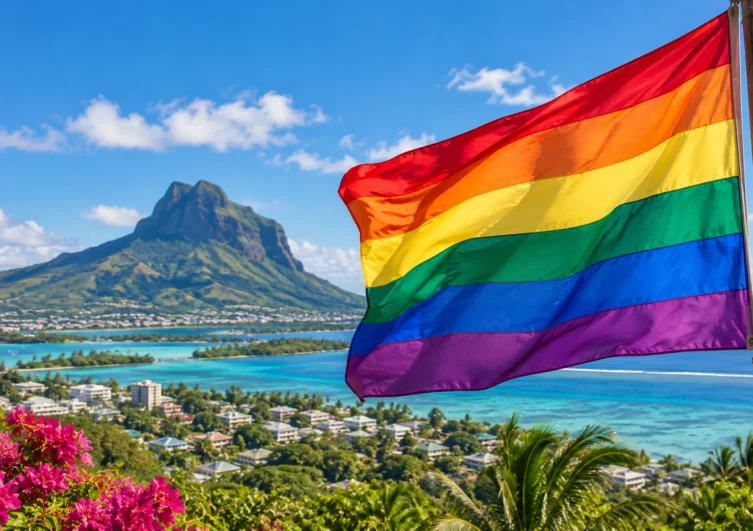
The campaign for same-sex civil marriage is gaining momentum in Mauritius following a finding by the country’s National Human Rights Commission that there is no explicit legal prohibition on marriage between two people of the same sex.
The commission’s position paper, published in July, found that the refusal by the Civil Status Office to register same-sex marriages could amount to discrimination based on sexual orientation. The finding followed complaints from two same-sex couples who had been refused marriage registration.
The development has given renewed momentum to OUT Moris, which launched a national campaign for civil marriage equality in May. The campaign is supported by other Mauritian LGBTQ+ organisations, including the Young Queer Alliance and Collectif Arc-en-Ciel.
International support has also followed. In September, the UK-based Peter Tatchell Foundation publicly backed OUT Moris and other campaigners, calling for equal access to civil marriage for same-sex couples.
A legal gap
Mauritius currently does not recognise same-sex marriage or civil unions. At the same time, its legislation does not contain an explicit provision stating that marriage can only take place between a man and a woman.
That legal gap is at the centre of the current debate.
The National Human Rights Commission concluded that the absence of an explicit prohibition, combined with constitutional protections against discrimination, raises questions about the legal basis for refusing same-sex couples access to civil marriage.
The issue also builds on a significant Supreme Court ruling from October 2023. The court struck down the application of Section 250 of the Criminal Code that criminalised consensual sexual relations between adult men in private, effectively ending Mauritius’ colonial-era criminalisation of same-sex intimacy.
The ruling was an important change in the country’s legal landscape, but it did not establish marriage equality.
Why civil marriage?
The campaign is specifically focused on civil marriage, rather than religious ceremonies.
That distinction is important because the organisations involved are seeking equal legal recognition from the state, including the rights and responsibilities attached to marriage, without requiring religious institutions to perform or recognise same-sex weddings.
Marriage can affect areas far beyond the ceremony itself, including inheritance, property, family recognition, next-of-kin status and decision-making when a partner becomes seriously ill.
For couples whose relationships are not legally recognised, those protections can become particularly important during periods of illness, separation or bereavement.
From decriminalisation to recognition
Mauritius’ LGBTQ+ legal landscape has changed considerably over the past three years.
The 2023 Supreme Court decision removed the criminalisation of consensual same-sex intimacy, while existing legislation already provides protection against discrimination based on sexual orientation in a number of areas.
But relationship recognition remains unresolved.
The Young Queer Alliance has been researching the legal and socioeconomic implications of marriage equality in Mauritius, including the effects on social protection, inheritance, financial security, healthcare decision-making and family recognition.
The organisation also filed a complaint with the National Human Rights Commission in February 2026 challenging what it described as discrimination preventing same-sex couples from marrying.
What happens next?
The Human Rights Commission’s position does not itself create marriage equality. The government and relevant authorities would still need to determine how the law should be interpreted or changed, and the issue could ultimately return to the courts.
For activists, however, the commission’s finding has changed the legal conversation.
Mauritius has already demonstrated that laws inherited from the colonial period can be challenged and overturned. The question now is whether the country’s legal framework can move from decriminalisation to full recognition of same-sex couples.
For a country that became the first African state outside South Africa to take major steps towards decriminalisation of same-sex intimacy, the marriage debate could become the next significant test of how far those reforms extend.

Leave a Reply