

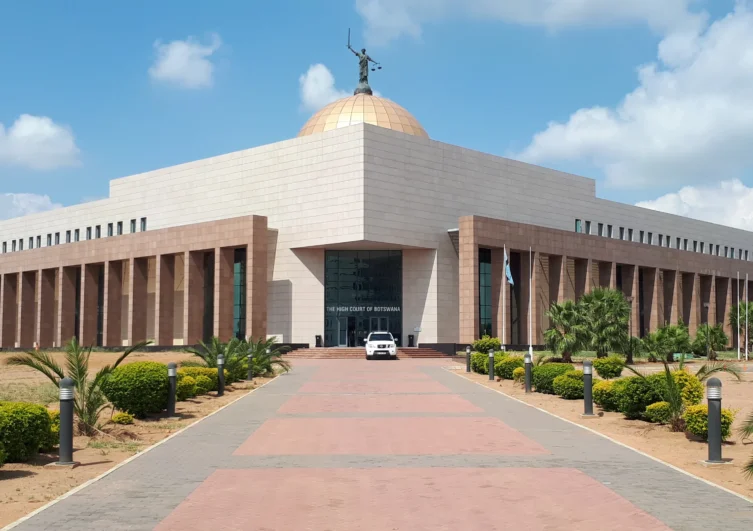
A legal battle brought by two women could reshape marriage equality in Botswana, seven years after the country decriminalized same-sex relationships.
Bonolo Selelo and Tsholofelo Kumile are challenging Botswana’s refusal to allow them to marry, in a case that could have far-reaching consequences for LGBTQ+ rights in southern Africa. The couple took their fight to the High Court after the Department of Civil and Registration refused, in May 2025, to register and publish the official notice of their intended marriage. Following hearings in October 2026, the court is expected to deliver its judgment on April 2, 2027.
At the centre of the dispute is Botswana’s Marriage Act and whether its provisions can be interpreted to include same-sex couples. Selelo and Kumile argue that excluding them from marriage violates constitutional guarantees, including dignity, equality and protection against discrimination. Their legal challenge is supported by LEGABIBO, Botswana’s leading LGBTQ+ rights organisation, with assistance from the Southern Africa Litigation Centre.
Marriage Equality After Decriminalisation
Botswana made international headlines in 2019 when its High Court struck down laws criminalising consensual same-sex sexual activity. The decision, subsequently upheld by the Court of Appeal, represented a significant development for LGBTQ+ rights in a region where criminalisation remains widespread. However, the ruling did not establish marriage equality, leaving same-sex couples without many of the legal protections available to heterosexual spouses.
Marriage affects far more than the formal recognition of a relationship. It can determine inheritance rights, property ownership, financial support, family recognition and the ability to make important decisions on behalf of a partner. According to the Southern Africa Litigation Centre, denying same-sex couples access to marriage leaves them more vulnerable and dependent on private legal arrangements.
The case has also attracted opposition from religious and cultural organisations, including the Evangelical Fellowship of Botswana, the Dingwetsi Association of Botswana and the Botswana House of Prayer and Transformation. These groups argue that marriage should remain restricted to relationships between men and women, citing religious beliefs and traditional definitions of the institution.
Lawyers representing the government have argued that changing the legal framework for marriage should be a matter for Parliament rather than the courts. The applicants, meanwhile, maintain that judicial intervention is necessary to protect constitutional rights.
If the challenge succeeds, the judgment could represent another significant development in Botswana’s evolving legal recognition of LGBTQ+ people. South Africa remains the only African country where same-sex marriage is currently legal, making the outcome particularly important for equality movements across the continent.
For Selelo and Kumile, however, the case begins with a much simpler demand: the right to have their relationship recognised by the country they call home.
Photo: Jota @ BRAZIL / Wikimedia Commons — Public Domain Mark 1.0.
Legenda: The High Court in Gaborone, Botswana (2019 archive photo).


Leave a Reply